

You are using an out of date browser. It may not display this or other websites correctly.
You should upgrade or use an alternative browser.
You should upgrade or use an alternative browser.
To lap, or not to lap, scope rings? That is the question.
- Thread starter Vtec44
- Start date

- Messages
- 961
Bedding a stock seems like a no brainer, but 4 sets of scopes and rings in I've sort of come to the conclusion that simply buying well machined rings like Seekins or Badger are probably sufficient.
Last 2 rifle setups have worked flawlessly and I'm not sure what I would've gotten by going to the trouble.
I'm suspicious that this practice wasn't historically just the result of fuddlore from the weaver dovetail mounted rings era when it was commonly a problem you'd have non concentric ring fitments.
Most rifles now you're already mounting both rings to a refined scope base that's undoubtedly linear and highly within machine tolerances, so assuming the rings are also a matched pair within machine tolerances at most the stack of errors is going to be in the thousandths off.
Then again it's not exactly rocket science and doesn't take terribly long to do. I know for a fact that it can be overdone however
Last 2 rifle setups have worked flawlessly and I'm not sure what I would've gotten by going to the trouble.
I'm suspicious that this practice wasn't historically just the result of fuddlore from the weaver dovetail mounted rings era when it was commonly a problem you'd have non concentric ring fitments.
Most rifles now you're already mounting both rings to a refined scope base that's undoubtedly linear and highly within machine tolerances, so assuming the rings are also a matched pair within machine tolerances at most the stack of errors is going to be in the thousandths off.
Then again it's not exactly rocket science and doesn't take terribly long to do. I know for a fact that it can be overdone however

- Messages
- 830
- Classified ads
- 2
Never have, and Ive mounted a lot of scopes on various rings and mounts.
D
Deleted member 16735
⚠️ New Member | No Deposits ☢️
 2025
2025
 10+
10+
 Top
Top
- Messages
- 1,863
What I wonder about lapping, and that goes for lapping receiver faces as well as scope rings etc., is why would we expect our home tools to be more accurate than the cnc or lathe or whatever machine tools that made the piece in the first place? I'm most concerned with movement so as long as the scope or barrel is locked down tight then I'm happy. I do use shims on barrel installation when there is play in the receiver.



- Messages
- 1,249
- Classified ads
- 2
I’ve talked with a few builders and gunsmiths over the years. The consensus was, back in the day lapping was a must for target or match rifles, no questions asked.
Now, with quality brands using highend machining with quality materials and exacting tolerances with good QC it’s no longer required unless you just want to.
Now, with quality brands using highend machining with quality materials and exacting tolerances with good QC it’s no longer required unless you just want to.

- Messages
- 193
So I went down the Youtube rabbit hole and found this video . At the end, there are a few actual alignment tests of some of the more expensive rings . TLDR: He tested some of the more expensive rings and bases and found most are slightly out of alignment. I guess for me it doesn't hurt as long as you don't over do it and I'll probably continue to do it since I have all the tools already. It seems even the more expensive rings are not always 100% aligned when mounted on a rifle due to other factors like receiver and mounting base. For what I use my rifles for (hunting), it's not going make a difference in accuracy but more or less just to make sure the scope is in place and I don't damage the tube. What are you thoughts?
Disclaimer: I'm not affiliated in anyway with the author of this video or any products shown in this video.
Disclaimer: I'm not affiliated in anyway with the author of this video or any products shown in this video.
Last edited:
D
Deleted member 16735
⚠️ New Member | No Deposits ☢️
2025
10+
Top
- Messages
- 1,863
I think that there's probably more variation in the picatinny rail I'm mounting to than the scope rings and even if they are out of alignment, if they hold the scope steady and point of impact doesn't change then it's not going to matter. Competitive bench rest guys can do it but no other shooting sport or hunting will need that level.of accuracy because there's a lot more variation due to ballistics than there will be on decently made rings. If you look at Bryan Litz's Weapon Employment Zone calculations there's a ton of error built into ballistics and the interaction of powder, projectile and environment. Obviously don't use Momstrum rings but hell I have a rifle with UTG lol
Last edited:
- Messages
- 961
I think that there's probably more variation in the picatinny rail I'm mounting to than the scope rings and even if they are out of alignment, if they hold the scope steady and point of impact doesn't change then it's not going to matter. Competitive bench rest guys can do it but no other shooting sport or hunting will need that level.of accuracy because there's a lot more variation due to ballistics than there will be on decently made rings. If you look at Bryan Litz's Weapon Employment Zone calculations there's a ton of error built into ballistics and the interaction of powder, projectile and environment. Obviously don't use Momstrum rings but hell I have a rifle with UTG lol
Agree with all of this.
- Messages
- 961
So I went down the Youtube rabbit hole and found this video . At the end, there are a few actual alignment tests of some of the more expensive rings . TLDR: He tested some of the more expensive rings and bases and found most are slightly out of alignment. I guess for me it doesn't hurt as long as you don't over do it and I'll probably continue to do it since I have all the tools already. It seems even the more expensive rings are not always 100% aligned when mounted on a rifle due to other factors like receiver and mounting base. For what I use my rifles for (hunting), it's not going make a difference in accuracy but more or less just to make sure the scope is in place and I don't damage the tube. What are you thoughts?
Disclaimer: I'm not affiliated in anyway with the author of this video or any products shown in this video.
Concentricity of two independent bodies with high tolerances is in my opinion one of the most difficult problems in machining. Short of mounting your rifle in a chuck with the rings themselves torqued down to the rail and horizontally milling the rings there's most certainly going to be a stack of tolerances.
The 'number of pieces + N'
Say each ring has an allowable defection of a thousandth, and then the rail itself has something in the hundredths.
You're going to stack those tolerances every time and just like wind sometimes they randomly stack in your favor. The question really ultimately is: "Does it affect my scope being cranked at it's designed tolerance(scope also has tube concentricity tolerances no doubt).
Then we have to ask does lapping introduce any risks that are outweighed by the potential benefits of performing it? I personally think it's probably a non-issue.
I care about my rifle consistently dropping pills on the X with the tuned load for that rifle. If it does this without my having lapped the rings then the question becomes a sort of tree falls in the forest thing from my perspective.
- Messages
- 1,163
- Classified ads
- 2
The need to lap depends on the specific parts of the build.
If you have a receiver with a separate scope base, check the flatness of the installed scope base.
If it's perfectly flat, there will not be a need to lap using modern good quality rings.
You can tell a set of rings are perfectly aligned on a perfectly flat base when a scope will float freely in the rings.
You should be able to slide a scope freely forward=backwards as well as rotate the scope in rings that do not have to caps installed.
If you set a scope into a set of rings the the scope is not freely moving, that's because the rings are not perfectly aligned.
If a base is not straight, I would take the base off and bed the base so that the base is perfectly flat.
Then you won't need to lap if you have good rings.
When you have a crooked base and then clamp rings on to the crooked base, the rings became crooked and lapping is a possible solution.
When you lap the rings, you then make the rings crooked so that the result of the crooked base and NOW crooked rings is that they are straight to each other.
Note that you can not move one of those rings on the base from where it was lapped because then it will be crooked again and need lapping again.
Lapped rings can never be re-positioned on a base or moved to another base without first being re-lapped in the new position.
If you have an action with a built-in scope base that's perfectly flat, good quality rings will not need lapping and you can move them around on the base or move them to other bases that are also flat without any issues.
If you have a receiver with a separate scope base, check the flatness of the installed scope base.
If it's perfectly flat, there will not be a need to lap using modern good quality rings.
You can tell a set of rings are perfectly aligned on a perfectly flat base when a scope will float freely in the rings.
You should be able to slide a scope freely forward=backwards as well as rotate the scope in rings that do not have to caps installed.
If you set a scope into a set of rings the the scope is not freely moving, that's because the rings are not perfectly aligned.
If a base is not straight, I would take the base off and bed the base so that the base is perfectly flat.
Then you won't need to lap if you have good rings.
When you have a crooked base and then clamp rings on to the crooked base, the rings became crooked and lapping is a possible solution.
When you lap the rings, you then make the rings crooked so that the result of the crooked base and NOW crooked rings is that they are straight to each other.
Note that you can not move one of those rings on the base from where it was lapped because then it will be crooked again and need lapping again.
Lapped rings can never be re-positioned on a base or moved to another base without first being re-lapped in the new position.
If you have an action with a built-in scope base that's perfectly flat, good quality rings will not need lapping and you can move them around on the base or move them to other bases that are also flat without any issues.
Last edited:
- Messages
- 207
- Classified ads
- 1
Seems every Remington 700 I have owned when installing/checking scope bases needed bedding-Regardless of base mfr (Badger, PRI, and Leupy). The assumption being that no two Remington receiver is machined exactly straight/parallel/cylindrical?If a base is not straight, I would take the base off and bed the base so that the base is perfectly flat.
- Messages
- 1,163
- Classified ads
- 2
The older ones that were hand finished on a belt sander are exactly as you said.Seems every Remington 700 I have owned when installing/checking scope bases needed bedding-Regardless of base mfr (Badger, PRI, and Leupy). The assumption being that no two Remington receiver is machined exactly straight/parallel/cylindrical?
The newer ones that are CNC machined and NOT belt sanded are pretty consistent.
D
Deleted member 16735
⚠️ New Member | No Deposits ☢️
2025
10+
Top
- Messages
- 1,863
on the old ones people talking about "truing" Remington 700 actions before putting nice precision rifle barrels on. There's a reason why no one uses Remington branded actions anymore they just use the footprint. Even if you aren't buying a custom you should just get a Bergara rather than a Remington, they're basically the same price.Seems every Remington 700 I have owned when installing/checking scope bases needed bedding-Regardless of base mfr (Badger, PRI, and Leupy). The assumption being that no two Remington receiver is machined exactly straight/parallel/cylindrical?
- Messages
- 207
- Classified ads
- 1
Yeah, I get it that some truing or "manipulation" will be required. Maybe what you say makes sense to a person just getting into precision rifles, but I have a reason for using the older Rem 700 receivers...There's a reason why no one uses Remington branded actions anymore
M40A1

M40A3

D
Deleted member 16735
⚠️ New Member | No Deposits ☢️
2025
10+
Top
- Messages
- 1,863
well to be fair those were custom built by the marine corps and not the off the shelf rem 700 action
- Messages
- 207
- Classified ads
- 1
I don't lap the rings, but I do bed the scope base to ensure it doesn't get torqued/twisted/bent since some rifle receivers may not exactly match the profile under the base. That will cause the rings to be out of alignment.I've always lapped mine mostly just to get an even surface contact, but recently was told it's unnecessary unless the rings are out of alignment.
- Messages
- 1,163
- Classified ads
- 2
The marine corps rifles were built on standard off-the-shelf receivers and bolts.well to be fair those were custom built by the marine corps and not the off the shelf rem 700 action
What's custom on them is the barrel and stock and some extra machining for clip slotting and sight bases.
D
Deleted member 16735
⚠️ New Member | No Deposits ☢️
2025
10+
Top
- Messages
- 1,863
I had read that they tuned the actions starting with the A1, so a custom action, a custom stock and a custom barrel. That sounds like a custom build to me!The marine corps rifles were built on standard off-the-shelf receivers and bolts.
What's custom on them is the barrel and stock and some extra machining for clip slotting and sight bases.
"t is worth noting that since the introduction of the M40A1 variant, the rifle has been accurized, fit and assembled by Marines, for Marines. Years of building M40 clones for the civilian market has given me a great respect for the level of skill and the attention to detail of the Marine gunsmiths and armorers who build these weapons in Quantico, Va. Remington has long been known for their lightweight, strong and cost-efficient Model 700. While factory Remington actions are fine for the casual whitetail hunter, the Marines use them purely as a starting point. There are many fine details that can make or break the accuracy of a bolt-action rifle, and these details are sorted out in a process called "blueprinting." A true match rifle should have the raceway of the bolt perfectly in line with the bore."
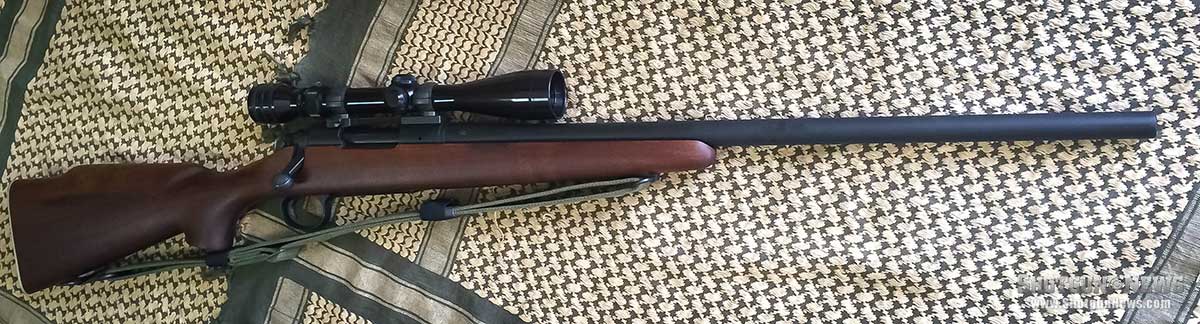
The USMC M40 Sniper Rifle: At the End of a Useful Life? - Firearms News
Next year, the Marine Corp will celebrate the 50th birthday of an old friend: the 7.62x51mm M40
 www.firearmsnews.com
- Messages
- 1,163
- Classified ads
- 2
A reworked factory action is still a factory action.I had read that they tuned the actions starting with the A1, so a custom action, a custom stock and a custom barrel. That sounds like a custom build to me!
"t is worth noting that since the introduction of the M40A1 variant, the rifle has been accurized, fit and assembled by Marines, for Marines. Years of building M40 clones for the civilian market has given me a great respect for the level of skill and the attention to detail of the Marine gunsmiths and armorers who build these weapons in Quantico, Va. Remington has long been known for their lightweight, strong and cost-efficient Model 700. While factory Remington actions are fine for the casual whitetail hunter, the Marines use them purely as a starting point. There are many fine details that can make or break the accuracy of a bolt-action rifle, and these details are sorted out in a process called "blueprinting." A true match rifle should have the raceway of the bolt perfectly in line with the bore."
The USMC M40 Sniper Rifle: At the End of a Useful Life? - Firearms News
Next year, the Marine Corp will celebrate the 50th birthday of an old friend: the 7.62x51mm M40
It's not like they made their own custom action or something.
It's still a factory Remington 700 action and bolt.
They can sleeve the bolt and do all sorts of rework to tighten up the action but it's still started as a factory receiver and bolt.
It's a modified factory action.
It's not a custom action.
A custom action is a whole new action made with different features that won't say "Remington 700" on it.
D
Deleted member 16735
⚠️ New Member | No Deposits ☢️
2025
10+
Top
- Messages
- 1,863
I get what you are saying however the topic was about tuning receivers which is what they did to the M40A1 and later rifles. A custom car generally has a lot of stock parts on it still though, so that's why I said "custom built" i.e. customized.