18+ Content Warning

By clicking Enter, you confirm you are 18 years of age or older and agree to comply with all applicable local, state, and federal laws.

Notice: Any content or member activity - including anything you may buy, sell, transfer, or discuss - must comply with current and upcoming laws.

Members are encouraged to stay informed: California Firearm Laws: 2026 Outlook & 2025 Recap . Responsibility for compliance rests solely with the individual member.

caguns.net

Welcome to CAguns.net!
Join our growing community where you can ask questions, share knowledge, or browse our classifieds section.

Sign up for a free account today and unlock full access! Once registered, you can search, post, and take advantage of exclusive features unavailable to guests.

A note on why more of the site now requires an account: automated scrapers and AI systems have been crawling our forums and classifieds at a scale. Requiring sign-in for those sections is the most effective tool we have. It takes a minute to register, it's free, and it keeps what happens here between actual members.

New to California gun ownership or trying to keep up with the changing laws? Check out our sister site CA2A.com — free courses, plain-English legal updates, and step-by-step guides built for California owners.

Advanced features are available only to registered members. Register today!

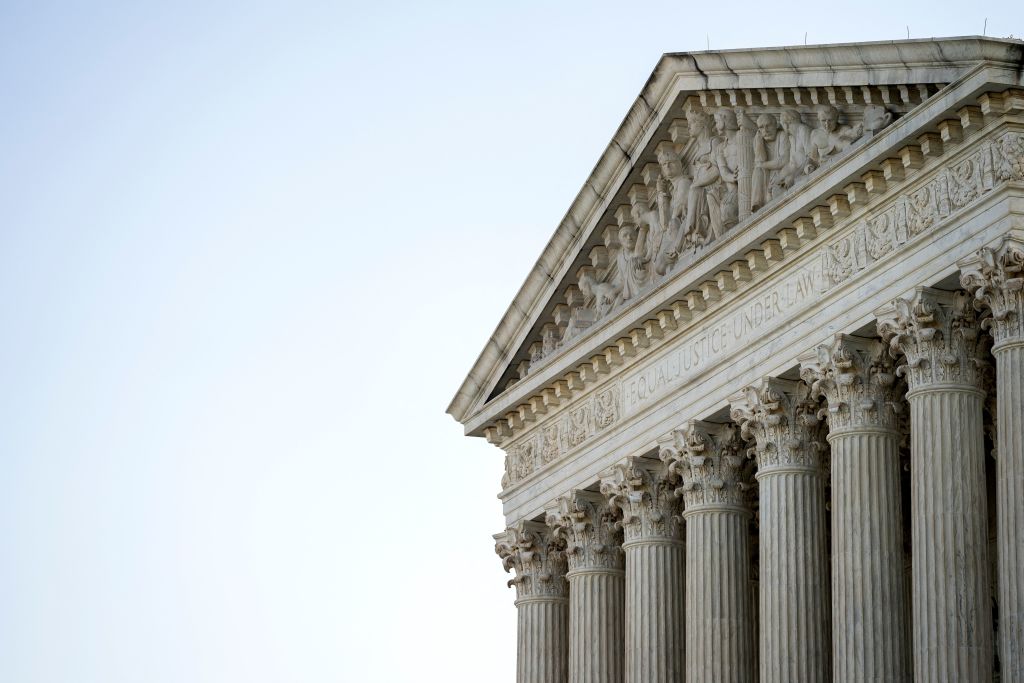
DUNCAN V. BONTA GOES TO SCOTUS CONFERENCE - California Large Capacity Magazine Prohibition

The Second Amendment is written clearly for those who are educated and understand grammar.

Bruen clearly outlines the steps for evaluating a law. Anti-gun judges understand it but deliberately mess around in their decisions. There are no “errors” in anything they do. Those judges know they are violating Bruen and know they will face no career level consequence.
Remember, Bruen is not legislation, nor is it part of the constitution. It is simply convoluted guidance, authored by Thomas which can be adhered to or not.

As for the 2nd being written clearly, it is the furthest thing from being clear when you consider the entire sentence.

"A well regulated Militia, being necessary to the security of a free State, the right of the people to keep and bear Arms, shall not be infringed"

The well regulated Militia is used as a justification and we have virtually no regulated militias any longer. Additionally, the people's right to keep and bear arms has not been infringed. You and I can keep and bear arms, just not any and every weapon imaginable. We can't own flamethrowers, land mines, claymore mines, autocannons, etc, etc.

Things are simply not black and white and a responsible government must balance our individual liberties with the 10th amendment's power of the state government to police public safety.
 
Remember, Bruen is not legislation, nor is it part of the constitution. It is simply convoluted guidance, authored by Thomas which can be adhered to or not.

As for the 2nd being written clearly, it is the furthest thing from being clear when you consider the entire sentence.

"A well regulated Militia, being necessary to the security of a free State, the right of the people to keep and bear Arms, shall not be infringed"

The well regulated Militia is used as a justification and we have virtually no regulated militias any longer. Additionally, the people's right to keep and bear arms has not been infringed. You and I can keep and bear arms, just not any and every weapon imaginable. We can't own flamethrowers, land mines, claymore mines, autocannons, etc, etc.

Things are simply not black and white and a responsible government must balance our individual liberties with the 10th amendment's power of the state government to police public safety.
For modern speakers—I agree it is not clear. But actual grammatical analysis indicates that it is clear.
 
SC judges are resistive to controversy. Not because they are afraid of controversy but because they are afraid of retaliation.

With highly organized antifa types well connected via encrypted apps, a large violent mod can be assembled within minutes.

Kavenaugh got a year of illegal public "protests" in front of his home with one attempted assasination attempt.

That is always in the back of their minds when making a decision. Without armed protection they are afraid and afraid for their families. If we want decisions based on merit, the security situation needs to change.
 
For modern speakers—I agree it is not clear. But actual grammatical analysis indicates that it is clear.
Whose grammatical analysis? Certainly not the legal community and the constitution and it's amendments are written in the language of law.
 
That is always in the back of their minds when making a decision. Without armed protection they are afraid and afraid for their families. If we want decisions based on merit, the security situation needs to change.
I'll agree to change the security situation if the situation regarding ethical behavior requirements for SCOTUS justices is changed. Right now, they have zero ethical "requirements".
 
Remember, Bruen is not legislation, nor is it part of the constitution. It is simply convoluted guidance, authored by Thomas which can be adhered to or not.

As for the 2nd being written clearly, it is the furthest thing from being clear when you consider the entire sentence.

"A well regulated Militia, being necessary to the security of a free State, the right of the people to keep and bear Arms, shall not be infringed"

The well regulated Militia is used as a justification and we have virtually no regulated militias any longer. Additionally, the people's right to keep and bear arms has not been infringed. You and I can keep and bear arms, just not any and every weapon imaginable. We can't own flamethrowers, land mines, claymore mines, autocannons, etc, etc.

Things are simply not black and white and a responsible government must balance our individual liberties with the 10th amendment's power of the state government to police public safety.
Go geek out reading Scalia's majority opinion in Heller, then come back and let's discuss and dive into Scalia's grammatical analysis of the text of the Second Amendment.
 
Go geek out reading Scalia's majority opinion in Heller, then come back and let's discuss and dive into Scalia's grammatical analysis of the text of the Second Amendment.
I've read it previously when it was first released. I completely disagree with Scalia's "opinions" especially the historical analysis which was highly flawed if not blatantly incorrect, especially the part about militias.

So, go ahead, start diving.
 
Bruen quotes Heller in saying that "dangerous and unusual weapons" are subject to regulation. The 2 part Bruen test is (1) whether the regulated conduct falls within the scope of the Second Amendment; and (2) if so, whether that regulation is consistent with the historical tradition of firearm regulation in the United States. So historically, what would be considered dangerous and unusual? would it be arms that can fire rapidly 50 rounds of ammunition? People would commonly carry 2 guns because they were each single shot. Even in the modern age we banned AR15s and "standard" capacity magazines in the 90s, AR15s weren't common until ~15 years ago when defense contractors like DPMS pivoted to public sales. Would banning arms for certain groups of people be within the historical tradition of firearm regulation? absolutely, blacks were banned from firearms even during reconstruction with a supreme court decision that said explicitly that the 14th amendment didn't apply gun rights to the states.

What many forget is the 2nd amendment, until the 14th amendment, only applied to federal rules, not states. So states could regulate arms however they wanted, and they did. only in 1868 did the bill of rights extend to state regulation and even then US v Cruikshank said in 1876 that the 2nd amendment didn't apply to state law. Also when we are looking at historical tradition, are we looking at state law individually or as a whole? Do the laws that one state had in the 1800s vs another? and which history are we talking about? because the 14th amendment came in 1868 so if we are taking an Originalist interpretation do we look at the late 1700s or the late 1800s?

Nothing about Bruen/Heller is straightforward or easy. These cases could really go either way even with the conservative majority.
 
I've read it previously when it was first released. I completely disagree with Scalia's "opinions" especially the historical analysis which was highly flawed if not blatantly incorrect, especially the part about militias.

So, go ahead, start diving.
How do you interpret Scalia's analysis and breakdown of the operative clause written grammar of the late 1700's American English used at the time? Prefatory vs. operative clause (grammar + method)


“The Second Amendment is naturally divided into two parts: its prefatory clause and its operative clause.”
“The former does not limit the latter grammatically, but rather announces a purpose.”
Authorities cited in same passage (as printed):
“See J. Tiffany, A Treatise on Government and Constitutional Law § 585, p. 394 (1867); Brief for Professors of Linguistics and English as Amici Curiae 3 …”
See: Heller, 554 U.S. at 577.

Prefatory clause’s (non-limiting) role
“But apart from that clarifying function, a prefatory clause does not limit or expand the scope of the operative clause.”

“See F. Dwarris, A General Treatise on Statutes 268–269 (P. Potter ed. 1871); T. Sedgwick, The Interpretation and Construction of Statutory and Constitutional Law 42–45 (2d ed. 1874).” Heller, 554 U.S. at 578

Operative clause breakdown (the headings + “right of the people”)

A. Operative clause heading + first analytic move

“1. Operative Clause.”
See: Heller, 554 U.S. at 579.

“The first salient feature of the operative clause is that it codifies a ‘right of the people.’ ”
Pinpoint cite: Heller, 554 U.S. at 579.

B. “Right of the people” = individual right (not collective)

“All three of these instances unambiguously refer to individual rights, not ‘collective’ rights …”
See: Heller, 554 U.S. at 579.

“Nowhere else in the Constitution does a ‘right’ attributed to ‘the people’ refer to anything other than an individual right.”
See: Heller, 554 U.S. at 580.

Operative clause breakdown (keep arms / bear arms)
A. “Arms” and scope (setup immediately before “keep” and “bear”)

“the Second Amendment extends, prima facie, to all instruments that constitute bearable arms …”
See: Heller, 554 U.S. at 582.

Authorities cited in same sentence (as printed):
“e. g., Reno v. American Civil Liberties Union, 521 U. S. 844, 849 (1997) … e. g., Kyllo v. United States, 533 U. S. 27, 35–36 (2001) …” Heller, 554 U.S. at 582.

B. “Keep Arms”

“Thus, the most natural reading of ‘keep Arms’ in the Second Amendment is to ‘have weapons.’ ”
See: Heller, 554 U.S. at 582.

“ ‘Keep arms’ was simply a common way of referring to possessing arms, for militiamen and everyone else.”
See: Heller, 554 U.S. at 583
“Bear Arms”

“At the time of the founding, as now, to ‘bear’ meant to ‘carry.’ ”
See: Heller, 554 U.S. at 584.

“When used with ‘arms,’ however, the term has a meaning that refers to carrying for a particular purpose—confrontation.”
See: Heller, 554 U.S. at 584.

“We think that Justice Ginsburg accurately captured the natural meaning of ‘bear arms.’ ”
See: Heller, 554 U.S. at 584.

“it in no way connotes participation in a structured military organization.”
See: Heller, 554 U.S. at 584.

“In numerous instances, ‘bear arms’ was unambiguously used to refer to the carrying of weapons outside of an organized militia.”
See: Heller, 554 U.S. at 585.
 
I'll agree to change the security situation if the situation regarding ethical behavior requirements for SCOTUS justices is changed. Right now, they have zero ethical "requirements".
None are specified nor required under the constitution. That desire is a modern "living, breathing document" response. That change is only wanted by those disagreeing with their decisions. It also would not have any enforcement mechanism unless a new constitutional amendment is passed.

That will not happen.
 
None are specified nor required under the constitution. That desire is a modern "living, breathing document" response. That change is only wanted by those disagreeing with their decisions. It also would not have any enforcement mechanism unless a new constitutional amendment is passed.

That will not happen.

Sort of. It's self-policing which is not ideal.

 
How do you interpret Scalia's analysis and breakdown of the operative clause written grammar of the late 1700's American English used at the time? Prefatory vs. operative clause (grammar + method)


“The Second Amendment is naturally divided into two parts: its prefatory clause and its operative clause.”
“The former does not limit the latter grammatically, but rather announces a purpose.”
Authorities cited in same passage (as printed):
“See J. Tiffany, A Treatise on Government and Constitutional Law § 585, p. 394 (1867); Brief for Professors of Linguistics and English as Amici Curiae 3 …”
See: Heller, 554 U.S. at 577.

Prefatory clause’s (non-limiting) role
“But apart from that clarifying function, a prefatory clause does not limit or expand the scope of the operative clause.”

“See F. Dwarris, A General Treatise on Statutes 268–269 (P. Potter ed. 1871); T. Sedgwick, The Interpretation and Construction of Statutory and Constitutional Law 42–45 (2d ed. 1874).” Heller, 554 U.S. at 578

Operative clause breakdown (the headings + “right of the people”)

A. Operative clause heading + first analytic move

“1. Operative Clause.”
See: Heller, 554 U.S. at 579.

“The first salient feature of the operative clause is that it codifies a ‘right of the people.’ ”
Pinpoint cite: Heller, 554 U.S. at 579.

B. “Right of the people” = individual right (not collective)

“All three of these instances unambiguously refer to individual rights, not ‘collective’ rights …”
See: Heller, 554 U.S. at 579.

“Nowhere else in the Constitution does a ‘right’ attributed to ‘the people’ refer to anything other than an individual right.”
See: Heller, 554 U.S. at 580.

Operative clause breakdown (keep arms / bear arms)
A. “Arms” and scope (setup immediately before “keep” and “bear”)

“the Second Amendment extends, prima facie, to all instruments that constitute bearable arms …”
See: Heller, 554 U.S. at 582.

Authorities cited in same sentence (as printed):
“e. g., Reno v. American Civil Liberties Union, 521 U. S. 844, 849 (1997) … e. g., Kyllo v. United States, 533 U. S. 27, 35–36 (2001) …” Heller, 554 U.S. at 582.

B. “Keep Arms”

“Thus, the most natural reading of ‘keep Arms’ in the Second Amendment is to ‘have weapons.’ ”
See: Heller, 554 U.S. at 582.

“ ‘Keep arms’ was simply a common way of referring to possessing arms, for militiamen and everyone else.”
See: Heller, 554 U.S. at 583
“Bear Arms”

“At the time of the founding, as now, to ‘bear’ meant to ‘carry.’ ”
See: Heller, 554 U.S. at 584.

“When used with ‘arms,’ however, the term has a meaning that refers to carrying for a particular purpose—confrontation.”
See: Heller, 554 U.S. at 584.

“We think that Justice Ginsburg accurately captured the natural meaning of ‘bear arms.’ ”
See: Heller, 554 U.S. at 584.

“it in no way connotes participation in a structured military organization.”
See: Heller, 554 U.S. at 584.

“In numerous instances, ‘bear arms’ was unambiguously used to refer to the carrying of weapons outside of an organized militia.”
See: Heller, 554 U.S. at 585.


Rather then asking me to make your case for you, why don't you articulate your thoughts?
 
None are specified nor required under the constitution. That desire is a modern "living, breathing document" response. That change is only wanted by those disagreeing with their decisions. It also would not have any enforcement mechanism unless a new constitutional amendment is passed.

That will not happen.

There is nothing stipulated in the constitution about providing security for SCOTUS or even POTUS. When it comes to ethical behavior, it is just as much a given as security. We expect SCOTUS justices to not be accepting lavish gifts, travel, vacations, "loans", etc. from the Epstein class and we expect all justices to recuse themselves from any case where they have even the slightest conflict of interest. For James Madison and the rest of the authors of the constitution that was a given.
 
The term "regulated" had a different definition back in 1790. It meant "prepared", not under specific control as modern "experts" define it.

"What is a militia?

At the time of the American Revolutionary War, militias were groups of able-bodied men
who protected their towns, colonies, and eventually states. "[When the Constitution was
drafted], the militia was a state-based institution," says Rakove. "States were responsible
for organizing this."

What did it mean to be well regulated?

One of the biggest challenges in interpreting a centuries-old document is that the meanings
of words change or diverge.

"Well-regulated in the 18th century tended to be something like well-organized, well-armed,
well-disciplined," says Rakove. "It didn't mean 'regulation' in the sense that we use it now, in
that it's not about the regulatory state. There's been nuance there. It means the militia was
in an effective shape to fight."

In other words, it didn't mean the state was controlling the militia in a certain way, but rather
that the militia was prepared to do its duty"

For more, see: https://constitutioncenter.org/images/uploads/news/CNN_Aug_11.pdf
 
I’m concerned at this point that kicking the can down the road yet again is an indication they won’t hear the case.

Maybe, maybe not. If they know they aren't going to hear it, they would just deny certiorari and be done with it. It's not like that would cause any more of a dustup than nixing Trump's tariffs.

Predicting what SCOTUS will do, especially this SCOTUS is the definition of a fools errand.
 
Congress was given the power to create security for the government and have done that. Assigning permanent 24/7 Secret Service details to Supreme Court justices would be easy to do. After all, both "sides" would benefit equally.

Our constitution was meant for a moral and religious people. Like Franklin said,

"A republic, IF you can keep it".

The founders had no reason to believe the culture of their new country would change so much. No one could have predicted what has come to pass. They did provide the tools to deal with almost anything, that was their brilliance. The rest is up to us, IF we can keep it.
 
Just in case some poor schmuck wanders in here expecting to findout what the status of Duncan is...

23 Feb: Orders don’t include Duncan (Case # 25-198). The case is relisted for conference on 27 Feb.

Also, Post # 1 keeps a running tally of activity (or lack thereof). I've also added a counter for each distribution to a new conference.
 
Last edited:
Back
Top Bottom