18+ Content Warning

By clicking Enter, you confirm you are 18 years of age or older and agree to comply with all applicable local, state, and federal laws.

Notice: Any content or member activity - including anything you may buy, sell, transfer, or discuss - must comply with current and upcoming laws.

Members are encouraged to stay informed: California Firearm Laws: 2026 Outlook & 2025 Recap . Responsibility for compliance rests solely with the individual member.

caguns.net

Welcome to CAguns.net!
Join our growing community where you can ask questions, share knowledge, or browse our classifieds section.

Sign up for a free account today and unlock full access! Once registered, you can search, post, and take advantage of exclusive features unavailable to guests.

A note on why more of the site now requires an account: automated scrapers and AI systems have been crawling our forums and classifieds at a scale. Requiring sign-in for those sections is the most effective tool we have. It takes a minute to register, it's free, and it keeps what happens here between actual members.

New to California gun ownership or trying to keep up with the changing laws? Check out our sister site CA2A.com — free courses, plain-English legal updates, and step-by-step guides built for California owners.

Advanced features are available only to registered members. Register today!

DUNCAN V. BONTA GOES TO SCOTUS CONFERENCE - California Large Capacity Magazine Prohibition

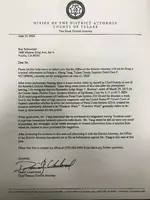
In 2020, Pheng Yang was charged with possession of LCMs and he claimed they were obtained during Freedom Week. He refused to substantiate the claim and wound up in protracted court proceedings which culminated with his attorney providing proof of legal acquisition.
Not true. His attorney did not provide any proof beyond Mr. Yang’s assertion that he obtained the magazines during Freedom Week.

IMG_0843.webp
 
Not true. His attorney did not provide any proof beyond Mr. Yang’s assertion that he obtained the magazines during Freedom Week.
Thanks. How about “inaccurate”? A bit of bleary-eye conflation this a.m.

What isn’t reflected in your document is that the attorney had to return to court to obtain a finding of “factually innocent” which would eventually expunge the record of the arrest.

But what’s important is that someone actually did get arrested for simple possession of LCMs in the early days of the Court’s injunction.

If Duncan fails, enforcement will commence.
 
It’s not illegal to posses a standard capacity magazine in California. The burden is on the state to prove you didn’t buy it during freedom week.

Simple possession is totally legal. You won’t find an instance of someone being booked for simple possession of a standard or high capacity magazine. It’s tagged on to other crime. If you’re not a criminal what are you worried about?
Negative.

It remains illegal to possess a large capacity magazine in California. Please refer to Penal Code section 32310 and note that none of the current legal activity concerning section 32310 has changed the content of the statute.

What has occurred is that federal court has issued an injunction that prevents the enforcement of the possession and mandatory disposal clauses of section 32310 pending resolution of the Duncan case.

That produces a condition that is very similar to the possession being legal, but is not the same. There is one very significant distinction that has the potential to arise if the Duncan v Bonta case gets resolved in favor of the state. If the case gets resolved in favor of the state, the injunction goes away. In that event, the state then has the ability to file possession cases for violations that occurred during the time the injunction was in place, up to the period of the statute of limitations. The key point being that the injunction did not make possession legal, it only prohibited prosecution during the time it was in effect. If the injunction goes away, the prohibition on enforcement goes away.

There is no remaining legal significance to "Freedom Week." As to the simple possession of magazines acquired during freedom week, those magazines are still illegal to possess under section 32310, and no prosecutions can be currently held due to the injunction. There was no "Grandfathering" of previously legally possessed magazines under section 32310. The injunction does not cover felony charges resulting from the purchase (or other listed forms of acquisition) that occurred during freedom week, but no prosecutions can now occur because the statute of limitations has run out.
 
Not true. His attorney did not provide any proof beyond Mr. Yang’s assertion that he obtained the magazines during Freedom Week.

View attachment 167042
All,

Please note that the filing decision made by the Tulare County District Attorney carries no value as legal precedent, nor does it settle the issue of which party bears the burden of proof that large-capacity magazines were acquired during "Freedom Week."

For the record, I agree that the filing decision of the District Attorney was properly made. At the risk of over-generalizing the point, the "Rule of Lenity" requires that legal ambiguities be resolved in favor of the defendant and Penal Code section 4 requires that enforcement efforts be directed toward to goal that: "All its provisions are to be construed according to the fair import of their terms, with a view to effect its objects and to promote justice."
 
I know this discussion is not specific to the Duncan case ... mods, feel free to move it if you like ...

Allow me to disagree with one small (but perhaps important point); for the record, I agree with all the rest of your posts:
There is no remaining legal significance to "Freedom Week." ... felony charges resulting from the purchase (or other listed forms of acquisition) that occurred during freedom week, but no prosecutions can now occur because the statute of limitations has run out.
I used to think the same. But it seems that in California, the criminal statute of limitations only starts when the crime is discovered, not when it is committed. So if this afternoon my local DA figures out that I bought a few magazines during the weeks before or after "Freedom Week", they have 3 years from today to prosecute me on that crime (except for tolling, which isn't relevant here). But they could not do that if I had bought the magazine during "Freedom Week", as it was not illegal at that time (and only at that time).

Note that the statute of limitations for civil cases is different: it starts when the event occurs, not when it is discovered by the plaintiff.

Your opinion? IANAL, but I play one.
EDIT: Answer from Rick below, with law quotation. Thank you.
 
Last edited:
The Yang case is a simple reminder that we don’t live under a “guilty until proven innocent” system. The government still has the burden of proving guilt beyond a reasonable doubt, and as the D.A.’s office in the Yang case noted, they had no evidence that Mr. Yang did not obtain his magazines during Freedom Week as he claimed. It was their burden to prove that he did not; not Mr. Yang’s burden to prove that he did. No amount of FUD on the internet will ever change that.
 
The Yang case is a simple reminder that we don’t live under a “guilty until proven innocent” system. The government still has the burden of proving guilt beyond a reasonable doubt, and as the D.A.’s office in the Yang case noted, they had no evidence that Mr. Yang did not obtain his magazines during Freedom Week as he claimed. It was their burden to prove that he did not; not Mr. Yang’s burden to prove that he did. No amount of FUD on the internet will ever change that.
I rhink you meant to write, *innocent until proven guilty".
 
I know this discussion is not specific to the Duncan case ... mods, feel free to move it if you like ...

Allow me to disagree with one small (but perhaps important point); for the record, I agree with all the rest of your posts:

I used to think the same. But it seems that in California, the criminal statute of limitations only starts when the crime is discovered, not when it is committed. So if this afternoon my local DA figures out that I bought a few magazines during the weeks before or after "Freedom Week", they have 3 years from today to prosecute me on that crime (except for tolling, which isn't relevant here). But they could not do that if I had bought the magazine during "Freedom Week", as it was not illegal at that time (and only at that time).

Note that the statute of limitations for civil cases is different: it starts when the event occurs, not when it is discovered by the plaintiff.

Your opinion? IANAL, but I play one.
I also am not a lawyer, just a retired LEO who has prepared a lot of criminal cases for trial, and was responsible for monitoring civil cases, and addressing policy issues resulting from civil cases for my agency.

I don't agree that the SOL for criminal cases is necessarily triggered upon the discovery of the crime. That is true in some exceptional cases, and those primarily being commercial crimes. Please see Penal Code sections 801.5 and 801.7 for such exceptional treatments of the SOL.

The generally applicable SOL for felony criminal violations is found in Penal Code section 800 and commences upon the violation. Here is the text:

"Except as provided in Section 799, prosecution for an offense punishable by imprisonment in the state prison for eight years or more or by imprisonment pursuant to subdivision (h) of Section 1170 for eight years or more shall be commenced within six years after commission of the offense." (Please note that the exception referred to in section 799 removes certain serious sex offenses from the SOL).

In your example, section 800 would prevent your prosecution.
 
Last edited:
I also am not a lawyer, just a retired LEO who has prepared a lot of criminal cases for trial, and was responsible for monitoring civil cases, and addressing policy issues resulting from civil cases for my agency.

I don't agree that the SOL for criminal cases is necessarily triggered upon the discovery of the crime. That is true in some exceptional cases, and those primarily being commercial crimes. Please see Penal Code sections 801.5 and 801.7 for such exceptional treatments of the SOL.

The generally applicable SOL for felony criminal violations is found in Penal Code section 800 and commences upon the violation. Here is the text:

"Except as provided in Section 799, prosecution for an offense punishable by imprisonment in the state prison for eight years or more or by imprisonment pursuant to subdivision (h) of Section 1170 for eight years or more shall be commenced within six years after commission of the offense." (Please note that the exception referred to in section 799 removes certain serious sex offenses from the SOL).

In your example, section 800 would prevent your prosecution.
How does it work if the offense is a wobbler and could be a misdemeanor? Does the SOL default to the maximum penalty possible? Interestingly simple possession of such magazines are only a misdemeanor so I believe only a single year SOL. But importation is a possible felony with 3 years per magazine. Subsequently, if you imported two magazines that would mean the maximum penalty would be 6 years so under the limit of 8 years in section 800. Would that then have the shorter period of SOL?
 
The generally applicable SOL for felony criminal violations is found in Penal Code section 800 and commences upon the violation.
Thank you for the correction! By learning from others I can become a better non-lawyer. :ROFLMAO:

How does it work if the offense is a wobbler and could be a misdemeanor? Does the SOL default to the maximum penalty possible?
Let me use the same technique Rick used, and look it up in the law itself. Section 801: "Except [inapplicable] prosecution for an offense punishable by imprisonment in the state prison ... shall be commenced within three years after commission of the offense." As importing a magazine is punishable by state prison (as a felony), it is 3 years. The fact that it is isn't always punished that harshly doesn't change that it is punishable.

Although I would expect a good defense attorney to try this argument on a judge if the DA charges it as a misdemeanor after over a year has passed. Many judges and/or many situations are very charitable and lenient.
 
How does it work if the offense is a wobbler and could be a misdemeanor? Does the SOL default to the maximum penalty possible? Interestingly simple possession of such magazines are only a misdemeanor so I believe only a single year SOL. But importation is a possible felony with 3 years per magazine. Subsequently, if you imported two magazines that would mean the maximum penalty would be 6 years so under the limit of 8 years in section 800. Would that then have the shorter period of SOL?
Under Penal Code section 16, California only recognizes three levels of crimes (Felonies, Misdemeanors, and Infractions). "Wobbler" is a slang term used to describe a crime that can be either a felony, or a misdemeanor, but a "Wobbler" is not a separate level of crime.

Penal Code section 17 describes how "Wobblers" are handled. In simple terms a "Wobbler" is a felony, and nothing less than a felony, until it wobbles. Once it wobbles to a misdemeanor, then it's a misdemeanor, and nothing more than a misdemeanor, from that point forward.

What that means, in practical terms, is that you get arrested for the felony. The prosecutor then makes a filing decision, which includes the decision as to whether the charge will remain a felony, or will be "wobbled" to a misdemeanor. Please note that the arresting LEO has no power to "wobble" the charge. If the prosecutor files the charge as a felony, then section 800 prescribes the period of the SOL. The felony punishment does not specify a term, therefore, application of section 1170(h) defines a maximum penalty of three years, thus making the SOL period also three years.

You made a good observation that the possession clause of section 32310 provides that a violation can be charged as either an infraction or misdemeanor. That kinda creates a new form of "Misdemeanor-Infraction Wobbler" that is not defined in statute in the same way that a "Felony-Misdemeanor Wobbler" is defined in section 17. In the absence of any statutory or case law defining the corresponding procedure, I would apply the same practice that the misdemeanor procedure applies until the charge is filed as an infraction.
 
Under Penal Code section 16, California only recognizes three levels of crimes (Felonies, Misdemeanors, and Infractions). "Wobbler" is a slang term used to describe a crime that can be either a felony, or a misdemeanor, but a "Wobbler" is not a separate level of crime.

Penal Code section 17 describes how "Wobblers" are handled. In simple terms a "Wobbler" is a felony, and nothing less than a felony, until it wobbles. Once it wobbles to a misdemeanor, then it's a misdemeanor, and nothing more than a misdemeanor, from that point forward.

What that means, in practical terms, is that you get arrested for the felony. The prosecutor then makes a filing decision, which includes the decision as to whether the charge will remain a felony, or will be "wobbled" to a misdemeanor. Please note that the arresting LEO has no power to "wobble" the charge. If the prosecutor files the charge as a felony, then section 800 prescribes the period of the SOL. The felony punishment does not specify a term, therefore, application of section 1170(h) defines a maximum penalty of three years, thus making the SOL period also three years.

You made a good observation that the possession clause of section 32310 provides that a violation can be charged as either an infraction or misdemeanor. That kinda creates a new form of "Misdemeanor-Infraction Wobbler" that is not defined in statute in the same way that a "Felony-Misdemeanor Wobbler" is defined in section 17. In the absence of any statutory or case law defining the corresponding procedure, I would apply the same practice that the misdemeanor procedure applies until the charge is filed as an infraction.

Appreciate the very thorough response
 
Lack of enforcement of a law renders it obsolete.
That's a groovy argument, but nothing to back it up.

Can you cite to any published case decision holding that lack of recent enforcement is a bar to prosecution?

You're not going going to find an example of a successful prosecution for simple possession in the last five years because enforcement has been enjoined for longer than that. You're presenting a nonsensical challenge here. The point remains that the injunction does not invalidate the statute. It only prevents prosecution for violating the statute.
 
Lack of enforcement of a law renders it obsolete.
Nonsense.

Please point me to an instance in recent history, like the last 5 years, where someone was arrested and charged for simple possession.
As was explained multiple times above, simple possession can not be charged right now. But magazines can be confiscated and destroyed, and buying them can be charged and convicted. If you read various forums (this one, Calguns, Reddit), you can find stories of people having that happen. A systematic search would be difficult: I think even the legal databases (Nexis, Westlaw) do not index lower court criminal cases by charge.

It’s illegal to set a mousetrap in CA without a hunting license.
Nonsense. See F&G code section 3003.1. Took five seconds to look up.

I’m not buying it. What your information tells me is they tried to make an example of one guy 6 years ago and failed. They pressed the issue, he pressed back and won.
That's logical. Right now, "Freedom Week" is a reasonable excuse for a charge of importing/buying a LCM, unless LEO and DA have receipts or observations. As it recedes from view, that will work less and less.

But you do you. If you think lack of other prosecution makes you immune, feel free to buy lots of large capacity magazines, and run around with them.
 
It's always interesting to watch the goalposts move so rapidly:
You won’t find an instance of someone being booked for simple possession of a standard or high capacity magazine.
And an instance from 6 years ago was promptly provided. So,....
Please point me to an instance in recent history, like the last 5 years, where someone was arrested and charged for simple possession.
Modifying your data selection window to eliminate data which disproved your earlier premise doesn't really work.
 
I don’t think I’m immune. I think it’s statistically implausible I find myself charged with a crime for simple possession of a magazine. That’s assuming I even posses them.

Desuetude. Flippantly write it off all you want. It’s a legal doctrine.
The statute hasn't fallen into disuse. It has been legally set aside during the appelate review process of its constitutionality. If desuetude applied here, there would be no case pending review by the Supreme Court.
 
23 Mar: Orders don’t appear to include Duncan (Case # 25-198).

For those keeping score, when redistributed, it will be #11.

ETA: Now rescheduled for 27 Mar conference.
This is not good. With the DC case going the opposite direction, I thought they might have taken it this past Fri.
 
Back
Top Bottom