There’s more than that.
- RHEL kernel is more stable for server systems
- Support updates are less frequent
- Support duration is longer 5 year Alma is 10
- Ubuntu release cycle is 2 years
- Alma is 3 years per major release
- RHEL is also optimized
I originally chose Ubuntu because it was fast and easy to develop on but the updates were too frequent and had one instance of an update taking down the system.
Now the OS is stripped with a lot less on it since we’ve been running for a year+ on this vm.
When it comes to caching, we have ~5 layers of caching since the beginning. Redis, Memcache, OpCache , disk Cache, and Edge Caching.
We've moved the service to a fully scalable architecture. I had it on the boot volume at first and did regular backups but with the growth of the site wanted the flexibility to tune and expand as needed.
In this case it’s not tied to a specific instance type. So scalability is very easy. Throughput/IOPs can be scaled by increasing disk size, two commands or independently via button. There’s no need to change instance types on this setup. Everything is scalable independently.
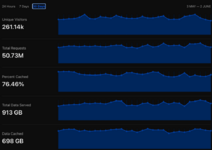
We’re serving upwards of 3.5 million page views a month now, so it’s quite a lot. I wanted to get ahead of the growth since it hasn't slowed down
No, it's purely cloud based on a differenct provider. Instance types are more for AWS.
It's kinda fun having your own service like the one you build for other people. Also updated was a observability service for logs, infra, and app metrics.
View attachment 64778



caguns.net






 But it's fun. I'm also building an AI support agent that will answer questions about the site and do some light tasks. Testing technology I'm building for my own education leveraging LocalLLM's and other cutting edge tech to see if its useful or if its hype.







 I tried to give the TLDR version.