18+ Content Warning

By clicking Enter, you confirm you are 18 years of age or older and agree to comply with all applicable local, state, and federal laws.

Notice: Any content or member activity - including anything you may buy, sell, transfer, or discuss - must comply with current and upcoming laws.

Members are encouraged to stay informed: California Firearm Laws: 2026 Outlook & 2025 Recap . Responsibility for compliance rests solely with the individual member.

caguns.net

Welcome to CAguns.net!
Join our growing community where you can ask questions, share knowledge, or browse our classifieds section.

Sign up for a free account today and unlock full access! Once registered, you can search, post, and take advantage of exclusive features unavailable to guests.

A note on why more of the site now requires an account: automated scrapers and AI systems have been crawling our forums and classifieds at a scale. Requiring sign-in for those sections is the most effective tool we have. It takes a minute to register, it's free, and it keeps what happens here between actual members.

New to California gun ownership or trying to keep up with the changing laws? Check out our sister site CA2A.com — free courses, plain-English legal updates, and step-by-step guides built for California owners.

Advanced features are available only to registered members. Register today!

Privacy, surveilance and economics in this age of AI

Just to be devils advocate, isn’t the fact that there is an uproar at how many people (police) have been found abusing it, a perfect example of those programs actually having good oversight and accountability? Just like any crime, yes they aren’t stopped initially from abusing it but they are being held accountable it seems.
yes
 
Just to be devils advocate, isn’t the fact that there is an uproar at how many people (police) have been found abusing it, a perfect example of those programs actually having good oversight and accountability? Just like any crime, yes they aren’t stopped initially from abusing it but they are being held accountable it seems.
No it means the problem is even worse than you can imagine and only extreme examples are held accountable. And yet there are already quite of few of these extreme examples. The entire reason they could abuse it is because the system collects data on non criminals. They should need a warrant to even collect the data in the first place.
 
No it means the problem is even worse than you can imagine and only extreme examples are held accountable. And yet there are already quite of few of these extreme examples. The entire reason they could abuse it is because the system collects data on non criminals. They should need a warrant to even collect the data in the first place.
If the extreme examples are held accountable, how could it be “even worse”? I’m very back on forth on this topic personally. Saying the problem is even worse seems like it would imply that there are “worse” cases that aren’t being investigated and yet you are saying we know about the “really bad” cases. I apologize for the confusion.
Are you meaning to say “more widespread “ possibly?
I don’t personally like being tracked, mostly because I have seen how radical some individuals who are in city, state, national positions , have become…..having their ideology and thinking being presented and proudly out loud that simply goes against what I believe this Country was founded upon.

On the other hand, I fully support law enforcement and other first responders for what they do and I like when they can catch these scumbag criminals that think they can just get away with anything. I mean especially in our “soft on crime” state
 
If the extreme examples are held accountable, how could it be “even worse”? I’m very back on forth on this topic personally. Saying the problem is even worse seems like it would imply that there are “worse” cases that aren’t being investigated and yet you are saying we know about the “really bad” cases. I apologize for the confusion.
Are you meaning to say “more widespread “ possibly?
I don’t personally like being tracked, mostly because I have seen how radical some individuals who are in city, state, national positions , have become…..having their ideology and thinking being presented and proudly out loud that simply goes against what I believe this Country was founded upon.

On the other hand, I fully support law enforcement and other first responders for what they do and I like when they can catch these scumbag criminals that think they can just get away with anything. I mean especially in our “soft on crime” state

If you look at the cases that people got in trouble for, they were often very extensive and were only caught after misusing information hundreds or even thousands of times https://ij.org/the-ij-database-of-alpr-abuse/. think about crime in general, for every criminal that's caught there are 10 that aren't. The system is wide open for abuse because it shouldn't be collected without a warrant. in US v Jones the SC said that police need warrants to put a GPS tracker on someone's car. There is a "reasonable expectation of privacy" protected by the 4th amendment even in public. Just because you are reading a document for instance in public doesn't mean that police can then read it. The issue is not that certain places are under video surveillance, it's that the license plate trackers are compiling data to act as a de facto GPS tracker which is how the data is being abused. Historically collecting this level of data on people was an easy 4th amendment violation because a person had to do it with a lot of effort. Why is it any different now that it's easy and automated?
 
This thread sucks!

I was hoping it'd be more easily digestible conversation for folks more curious about this stuff but don't take it too seriously.

Ya'll writing an essay for every response.

miles teller tns GIF by Two Night Stand
Unfortunately all problems we face can't be simple black or white summaries.
 
Just to be devils advocate, isn’t the fact that there is an uproar at how many people (police) have been found abusing it, a perfect example of those programs actually having good oversight and accountability? Just like any crime, yes they aren’t stopped initially from abusing it but they are being held accountable it seems.
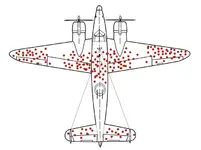
This is what is known as "survivorship bias"
 

Attachments

  • survivorshipbias.webp
    survivorshipbias.webp
    21.4 KB · Views: 2
When considering a problem of this magnitude unfortunately the natural instinct is to consider the present day nature of the problem. If you consider this from the lens of a systems thinker however you quickly realize that the future iterations of this have consequences that far outweigh the miniscule benefits for the majority of modern society.

If you're going to foist this machine upon all of us it's not just the intellectual burden you hold to tell us how to hold it transparent and accountable today(already failing miserably on this front) it's also your burden to justify how future unimaginable abuses of this data will be prevented.

For all everyone here knows all this data could go just as public domain as all the other data we've someone been misled into sharing about ourselves that was previously supposedly private. I'm not going to go down the rabbit holes of hypothetical scenarios where this could be used against you in the future, but I assure you THERE ARE NUMEROUS EXAMPLES.
 
Just a short reply to a small part of your message:


No. What it is saying: don't search or seize, unless you have a good enough reason that a conviction seems plausible or probably. That is for example enshrined in the reasons for getting a warrant.


Here's an example to maybe change your mind: Adam gets murdered. Shot from the other side of the street, through the kitchen window, by a 9mm round. The police sort of suspect that Bob did it, but they don't have solid evidence, and in particular they don't have a motive. Adam, Bob and Bob's wife Eve used to be best friends. So they go back to their Flock cameras, and find: (a) Starting about 6 months ago, Eve was going to Adam's place on her lunch break from work regularly, coming out an hour later looking flushed with her clothes in disarray. (b) 5 months ago Bob left home in his car in the evening, looking very angry, and slept in the parking lot of a state park for two nights. (c) Since then, Bob and Eve have not been seen driving together. And Adam has not been to BBQ at Bob's and Eve's house, which he used to go to nearly every weekend. (d) Starting 4 months ago, Bob, who had long been a gun owner, started regularly going to an informal range on BLM land after work, and practicing shooting at 25 yards.

All this information comes from Flock cameras (and similar things), which recognized their license plate numbers, and Bob's face at the range. I think there's enough here to some probably cause warrants, and with some more information or a confession also a conviction. Suddenly Flock cameras are a valuable investigative tool to get a murder conviction. And in this particular case, I'm sure the PD investigators would be able to get a warrant to review the Flock footage, see RickD427's post from above.


No, but it's a starting point. And it is easily automated, since money can be reasonable well measured. And it might be the step that starts a culture change: Yes, government is actually responsible for its screwups, and can be held responsible in a court of law, as a matter of course, not as the rare exception (which in some police departments has sadly become the rule rather than the exception, for example San Jose PD is famous for having to spend a ton of money because some of its officers seem to be out of control, hinting at a systemic training and hiring problem).


The place where I'm very different from most people here on the forum: I'm actually in favor or MORE government, but if AND ONLY IF the government uses its power for good. So for example, CARB is right out, that organization needs to be eat least heavily shrunk and have its wings clipped.


The example you provided does nothing to change my mind. Let's clarify here what you're offering as a trade off. In order to make the job of finding some people guilty in what are somewhat rare circumstances in spite of all the other tools already available to police which aren't godlike omniscience into viewing every moment of every single person's life you're willing to sacrifice privacy entirely as a concept?

Ensuring Bob's conviction(why can't they gather enough data to get that conviction without all this additional evidence like they have been for hundreds of years now?) isn't worth the cost of imprisoning our entire society in a state surveillance machine. You're ONE bad election away and one bar removed from what constitutes a crime in the eyes of the state from automated imprisonment of any and all ideological adversaries. TODAYS implementation is already exceeding the worst China can accomplish.
 
When considering a problem of this magnitude unfortunately the natural instinct is to consider the present day nature of the problem. If you consider this from the lens of a systems thinker however you quickly realize that the future iterations of this have consequences that far outweigh the miniscule benefits for the majority of modern society.

If you're going to foist this machine upon all of us it's not just the intellectual burden you hold to tell us how to hold it transparent and accountable today(already failing miserably on this front) it's also your burden to justify how future unimaginable abuses of this data will be prevented.

For all everyone here knows all this data could go just as public domain as all the other data we've someone been misled into sharing about ourselves that was previously supposedly private. I'm not going to go down the rabbit holes of hypothetical scenarios where this could be used against you in the future, but I assure you THERE ARE NUMEROUS EXAMPLES.
Like I stated, I don’t like it either for exactly this reason. Are there benefits, yeah, but the downside is huge. As a law abiding citizen, I don’t overthink it but it could get really bad.
 
The example you provided does nothing to change my mind. Let's clarify here what you're offering as a trade off. In order to make the job of finding some people guilty in what are somewhat rare circumstances in spite of all the other tools already available to police which aren't godlike omniscience into viewing every moment of every single person's life you're willing to sacrifice privacy entirely as a concept?

Ensuring Bob's conviction(why can't they gather enough data to get that conviction without all this additional evidence like they have been for hundreds of years now?) isn't worth the cost of imprisoning our entire society in a state surveillance machine. You're ONE bad election away and one bar removed from what constitutes a crime in the eyes of the state from automated imprisonment of any and all ideological adversaries. TODAYS implementation is already exceeding the worst China can accomplish.
On the flip side, complaining about it via a forum isn’t helping make any change whatsoever lol
It’s issues like this though and others like it that I believe it would be beneficial to have “Chapters” or actual real life meet ups of CAGUNS members to gather and put more action into making change .
 
Like I stated, I don’t like it either for exactly this reason. Are there benefits, yeah, but the downside is huge. As a law abiding citizen, I don’t overthink it but it could get really bad.
The conditions which make you a "law abiding citizen" are easily changed and backdated at any given time. I wouldn't count on that being a reliable factor in whether or not this is a good idea.
 
On the flip side, complaining about it via a forum isn’t helping make any change whatsoever lol
It’s issues like this though and others like it that I believe it would be beneficial to have “Chapters” or actual real life meet ups of CAGUNS members to gather and put more action into making change .

I'm all for real life meetups, but don't underestimate how educating and associating with like minded people can change things. We all may have varying disagreements, but the more educated we are on various topics the more influential we all become in our own lives. This is how ideas change and spread.
 
To begin with: I'm not at all sure that I like Flock (or similar services). Nor am I sure that the data they collect should be accessible to the public, or to government and law enforcement agencies without warrant. I'm just point out that the question is not black and white. You seem to see the question as either completely black or white, and that is a dangerous over-simplification.

The example you provided does nothing to change my mind. Let's clarify here what you're offering as a trade off. In order to make the job of finding some people guilty in what are somewhat rare circumstances in spite of all the other tools already available to police which aren't godlike omniscience into viewing every moment of every single person's life you're willing to sacrifice privacy entirely as a concept?
And now some more detailed criticism of your post: Being able to see and record what happens in public is not "godlike omniscience into viewing ever moment of every single person's life". For example, I'm sitting in the living room right now, and I'm 100% sure no Flock camera or other such thing can see me, or know what I'm doing. Your exaggeration makes your argument quite invalid.

Next, "sacrifice privacy entirely" is also an exaggeration. When I'm out in public (like driving or walking on a public road, where anyone can see me and recognize my car or my face) is not "privacy". And that "anyone" includes literally anyone, also government employees and agencies. It seems insane to me to make a set of laws or rules that say that when I'm out in public, only my friends and neighbors are allowed to see me, but not anyone who works for the government.

By the way, if you want to know what I'm doing in the afore-mentioned living room: Typing a forum post responding to you. Want to know what I did until a few minutes ago? I was on the phone with the IRS, to figure out what ever happened to one of my tax returns which is taking too long to process. So indeed, the US government knows EXACTLY what I was doing a little while ago. But I'm all in favor of putting firewalls in there: Just because a friendly federal IRS staffer knows that I'm calling him at 10:35 on a Thursday, doesn't imply that the local county building inspector needs to also know that the ceiling fan in the living room I'm sitting in was installed without permits. Privacy is complex and multi-faceted.

Ensuring Bob's conviction(why can't they gather enough data to get that conviction without all this additional evidence like they have been for hundreds of years now?)
Because a lot of criminals have not been caught, or have had to be not convicted, because evidence is objectively hard to gather. Real-world example: A former neighbor hit their spouse with a 2x4, and then threatened their spouse by pointing a loaded gun at their head. I know both spouses and have talked with them, the head injury and treatment have been documented in civil court filings years afterwards, so I'm 100% sure the facts are correct. Yet the aggressor spouse was not convicted, because the victim spouse refused to testify, leaving the DA no choice but to drop the case. They got their guns back (had to turn them into an FFL when one was arrested for felony ADW/GBI). This is an example of a case where more evidence would be a wonderful thing. Today the clearance rate for murder is roughly one half. The fact that we've been unable to convict roughly half of all murderers, for hundreds of years, is an embarrassment. Not an accomplishment.

(And to be honest, the above example has nothing to do with Flock cameras: the crime occurred in their house, where Flock etc. don't reach, for good reasons.)

I'll go even further: ALPRs like Flock are not only justified by eventually catching murderers and domestic abusers. That is the rare but high payoff example, the tip of the iceberg. They can also be justified by many other things. For example, real-time tracking of people fleeing crime scenes (many examples of that have been published). Or tracking low-level car theft. As a real-world example: Somewhat near our house is a known place where a "chop shop" operates (they take stolen cars, part them out, and sell bits as spare parts, or re-weld the bits into vehicles whose origin is hard to establish and sell them on the black used car market). The folks operating the chop shop are criminals in all respect, associated with a handful of serious crimes (ranging from murder to arson to rape), and a whole lot of minor or lifestyle crimes (like causing a forest fire roughly 3 times per year on average), and being involved with drug distribution. I've had meaningful discussions with the sheriff's deputies who work the area, and they say: What can we do? We go in there, and we find a dozen stolen cars dumped in the creek. We talk to the car shop that operates there, and they play dumb and claim to have no idea how it got there, and we can't catch them in the act of driving it or receiving it. Wouldn't it be wonderful if the sheriff could easily get footage of the lady who operates the chop shop (with her distinctive hair style) being seen on the big county highway driving that exact car?

Also don't forget that private car repo companies are legally operating license plate readers, independent of Flock, Motorola, and Palantir. It's good for their business if they can find more people not doing car payments and repossess those. Is it good for society if they do? Probably, but we also know that repo agents and debt collectors are among the most troubling business in operating illegally and brutally, and need a lot more control and supervision. Again, the 4A doesn't help at all here (they are not a government entity, and have every right to see and remember things). But they are probably more worrisome than governmental use of Flock, since they can deal with the data under the table. At least Flock won't sell their data to the dark web, since if they got caught, they could kiss their lucrative government business good-bye.

But, as I keep repeating: We need to find a way to both accomplish better law enforcement, and prevent abuses, both by government (including LE) and by private parties.

isn't worth the cost of imprisoning our entire society in a state surveillance machine. You're ONE bad election away and one bar removed from what constitutes a crime in the eyes of the state from automated imprisonment of any and all ideological adversaries. TODAYS implementation is already exceeding the worst China can accomplish.
The comparison with China is insane. We are very far away from that.

And the guard against "one bad election" (which is indeed a worry) is to install a culture of respect for the law and for rights. Artificially hobbling the capabilities of government because it MIGHT abuse it tends to not work, because a sufficiently crooked government will simply ignore the artificial limitations. See the example above of ICE (an IMMIGRATION! agency) trying to get a complete database of all voting in the US ... that is a clear abuse of power.

Remember the old saying: The internet treats censorship as a malfunction and routes around it. If we make it so the NSA can't buy license plate reader data from Flock, they will get it elsewhere. We're better off making sure that Flock exists, thrives, is open about its business, and operates within the restraints of the law (and at this point in the discussion, we don't know what those restraints should be, as both sides have good arguments). I want to be able to see Flock's quarterly report, and have broken down in their income statement how much of their revenue was from the federal government, state government, local government (those will be most LE agencies), and foreign governments. And then be able to cross-compare those numbers against the (partially published) budgets of these agencies. Sunlight is good.

This discussion is a lot like the question many engineers face: Should I work for weapons companies (which today includes most of computing)? It's ethically troubling to build things that kill people. But is it ethically troubling to build things that kill bad people? Then, who is bad? Well, that tends to change. For example, Russia and Russians alternate between good and bad roughly every decade. And if I choose to not work on armaments, that probably just means that someone else who has fewer moral compunctions or is more easily bribed will do it. The historiography of Los Alamos is rife with these debates, and the answer is very much not black and white.
 
This is what is known as "survivorship bias"
But survivorship bias is a well known issue, and there are well known techniques for compensating for it. Or at least recognizing it and ignoring known-biased data. That picture is in every statistics and data science textbook.

Just because you can't measure EVERYTHING doesn't mean that ALL data must be thrown away.
 
To begin with: I'm not at all sure that I like Flock (or similar services). Nor am I sure that the data they collect should be accessible to the public, or to government and law enforcement agencies without warrant. I'm just point out that the question is not black and white. You seem to see the question as either completely black or white, and that is a dangerous over-simplification.


And now some more detailed criticism of your post: Being able to see and record what happens in public is not "godlike omniscience into viewing ever moment of every single person's life". For example, I'm sitting in the living room right now, and I'm 100% sure no Flock camera or other such thing can see me, or know what I'm doing. Your exaggeration makes your argument quite invalid.

Next, "sacrifice privacy entirely" is also an exaggeration. When I'm out in public (like driving or walking on a public road, where anyone can see me and recognize my car or my face) is not "privacy". And that "anyone" includes literally anyone, also government employees and agencies. It seems insane to me to make a set of laws or rules that say that when I'm out in public, only my friends and neighbors are allowed to see me, but not anyone who works for the government.

By the way, if you want to know what I'm doing in the afore-mentioned living room: Typing a forum post responding to you. Want to know what I did until a few minutes ago? I was on the phone with the IRS, to figure out what ever happened to one of my tax returns which is taking too long to process. So indeed, the US government knows EXACTLY what I was doing a little while ago. But I'm all in favor of putting firewalls in there: Just because a friendly federal IRS staffer knows that I'm calling him at 10:35 on a Thursday, doesn't imply that the local county building inspector needs to also know that the ceiling fan in the living room I'm sitting in was installed without permits. Privacy is complex and multi-faceted.


Because a lot of criminals have not been caught, or have had to be not convicted, because evidence is objectively hard to gather. Real-world example: A former neighbor hit their spouse with a 2x4, and then threatened their spouse by pointing a loaded gun at their head. I know both spouses and have talked with them, the head injury and treatment have been documented in civil court filings years afterwards, so I'm 100% sure the facts are correct. Yet the aggressor spouse was not convicted, because the victim spouse refused to testify, leaving the DA no choice but to drop the case. They got their guns back (had to turn them into an FFL when one was arrested for felony ADW/GBI). This is an example of a case where more evidence would be a wonderful thing. Today the clearance rate for murder is roughly one half. The fact that we've been unable to convict roughly half of all murderers, for hundreds of years, is an embarrassment. Not an accomplishment.

(And to be honest, the above example has nothing to do with Flock cameras: the crime occurred in their house, where Flock etc. don't reach, for good reasons.)

I'll go even further: ALPRs like Flock are not only justified by eventually catching murderers and domestic abusers. That is the rare but high payoff example, the tip of the iceberg. They can also be justified by many other things. For example, real-time tracking of people fleeing crime scenes (many examples of that have been published). Or tracking low-level car theft. As a real-world example: Somewhat near our house is a known place where a "chop shop" operates (they take stolen cars, part them out, and sell bits as spare parts, or re-weld the bits into vehicles whose origin is hard to establish and sell them on the black used car market). The folks operating the chop shop are criminals in all respect, associated with a handful of serious crimes (ranging from murder to arson to rape), and a whole lot of minor or lifestyle crimes (like causing a forest fire roughly 3 times per year on average), and being involved with drug distribution. I've had meaningful discussions with the sheriff's deputies who work the area, and they say: What can we do? We go in there, and we find a dozen stolen cars dumped in the creek. We talk to the car shop that operates there, and they play dumb and claim to have no idea how it got there, and we can't catch them in the act of driving it or receiving it. Wouldn't it be wonderful if the sheriff could easily get footage of the lady who operates the chop shop (with her distinctive hair style) being seen on the big county highway driving that exact car?

Also don't forget that private car repo companies are legally operating license plate readers, independent of Flock, Motorola, and Palantir. It's good for their business if they can find more people not doing car payments and repossess those. Is it good for society if they do? Probably, but we also know that repo agents and debt collectors are among the most troubling business in operating illegally and brutally, and need a lot more control and supervision. Again, the 4A doesn't help at all here (they are not a government entity, and have every right to see and remember things). But they are probably more worrisome than governmental use of Flock, since they can deal with the data under the table. At least Flock won't sell their data to the dark web, since if they got caught, they could kiss their lucrative government business good-bye.

But, as I keep repeating: We need to find a way to both accomplish better law enforcement, and prevent abuses, both by government (including LE) and by private parties.


The comparison with China is insane. We are very far away from that.

And the guard against "one bad election" (which is indeed a worry) is to install a culture of respect for the law and for rights. Artificially hobbling the capabilities of government because it MIGHT abuse it tends to not work, because a sufficiently crooked government will simply ignore the artificial limitations. See the example above of ICE (an IMMIGRATION! agency) trying to get a complete database of all voting in the US ... that is a clear abuse of power.

Remember the old saying: The internet treats censorship as a malfunction and routes around it. If we make it so the NSA can't buy license plate reader data from Flock, they will get it elsewhere. We're better off making sure that Flock exists, thrives, is open about its business, and operates within the restraints of the law (and at this point in the discussion, we don't know what those restraints should be, as both sides have good arguments). I want to be able to see Flock's quarterly report, and have broken down in their income statement how much of their revenue was from the federal government, state government, local government (those will be most LE agencies), and foreign governments. And then be able to cross-compare those numbers against the (partially published) budgets of these agencies. Sunlight is good.

This discussion is a lot like the question many engineers face: Should I work for weapons companies (which today includes most of computing)? It's ethically troubling to build things that kill people. But is it ethically troubling to build things that kill bad people? Then, who is bad? Well, that tends to change. For example, Russia and Russians alternate between good and bad roughly every decade. And if I choose to not work on armaments, that probably just means that someone else who has fewer moral compunctions or is more easily bribed will do it. The historiography of Los Alamos is rife with these debates, and the answer is very much not black and white.


I think you deeply under appreciate the current state of the American Surveillance empire that's already been built. Firstly these cameras and license plate readers do not exist within a vacuum. They exist as one small component of a much broader system that gathers all manner of data like credit card usage, geolocation data based on your phone location, data about networks your phone is connecting to and what you're doing online, people you're with at any given time and what they're purchasing in your presence. More insidious, What content people around you are consuming, and therefore triggers you're likely to be susceptible to.

China's surveillance and influence systems are downright archaic compared to the empire we've built Cambridge analytica was already far advanced to anything that you could observe in China. I've been to China and seen how everyone operates there there's simply no contest.

The argument that it's hard to catch criminals is an entirely different problem to whether or not Americans have the right to not be surveiled. Those are two completely different subjects.
 
But survivorship bias is a well known issue, and there are well known techniques for compensating for it. Or at least recognizing it and ignoring known-biased data. That picture is in every statistics and data science textbook.

Just because you can't measure EVERYTHING doesn't mean that ALL data must be thrown away.

I'm not arguing that we shouldn't be holding police accountable to how they use these systems. I'm arguing they shouldn't have these systems in the first place.

Is Flock the private company allowed to sell this data to Qatar? Israel? Our intelligence partners in Five eyes? Why not? It's a private company collecting data in order to sell that data? If the data they're selling is a product what are the guidelines against them selling that data presently?
 
I think you deeply under appreciate the current state of the American Surveillance empire that's already been built.
Trust me, I know way more than the average person about it. Welcome to Silicon Valley.

They exist as one small component of a much broader system that gathers all manner of data like credit card usage, geolocation data based on your phone location, data about networks your phone is connecting to and what you're doing online, people you're with at any given time and what they're purchasing in your presence.
You are treating that as one system. It is not. On the contrary, it is a hugely distributed system, with parts that intentionally don't cooperate. Famous quote (I think from a WW2 army general): "The germans are our adversary; the navy is the enemy".

In reality, Google/Amazon/Microsoft/Apple/Netflix/Facebook/Twitter=X/... knows way more about private individuals than the government agencies do. Every time you do a search, or type into your browser's address bar (which is an implicit search), or check the news online, or watch a Youtube etc. video, they know what you do. And they store it, analyze it, and use it to tailor ads, videos, links, and even search results to your perceived tastes. And it is not only them. Try ordering some plumbing fitting or cleaning supplies from Zoro, and you'll get postcards with ads from Zoro, which strangely feature products you are actually likely to want. Just like Youtube knows whether I enjoy cat videos or sex with goats (hint: it is neither), Zoro knows what stuff I need around the house (hint: they got me figured out). And don't get me started on phone companies, which are all crooks and criminals.

Some of these large companies have been known to share or sell their data (only good example: Facebook to Cambridge Analytica). Others religiously keep their data private and refuse to share it, even with researchers. Perhaps out of a concern for privacy, perhaps because they know that the information is extremely valuable and sharing it would be suicidal. None of them willingly share data with the US government, other than when legally required by court orders. Some (in particular Apple) are famously strict about fighting subpoenas and court orders. Some of those companies have detected attempts at intrusion by US government agencies (like wiretapping in or between data centers), and AFAIK they are now all encrypting data at rest and in transit, mostly to guard against the US government. Yes: Places like Google see the NSA as the enemy, just like an army general saw the navy as the enemy.

The situation in Russia or China (as examples) is very different. You can safely assume that Yandex (for a long time the search engine behind the dishonestly privacy-advertising DuckDuckGo) is wide open to Russia's FSB. And many people in Silicon Valley know that Baidu/Tencent=WeChat/Bytedance=TikTok are integrated with the "great firewall" (which is a large Chinese government IT organization, which among others isolates Chinese consumers from western information sources). Just look around Silicon Valley for offices of these companies (ByteDance right next to SJC airport, Baidu has offices right next to Google buildings, Tencent is in the heart of Palo Alto) to see that their US presence is to a large extent targeting espionage of the US internet industry.

Can we rein in Google and Facebook? We keep trying. They keep paying billions in fines. Are those fines for bad behavior, or are those government shakedowns and a form of illegal taxation? That is in the eye of the beholder.

The size and location of the NSA data centers is publicly known. Compare it to the sizes of data centers of the hyperscalers, and one immediately that barking up the federal government tree is silly. And compared to either, Flock (or the small car repo companies operating small sedans with high-speed ALPR hardware to catch people back on their car payments) are both small fish, but also much less well controlled and understood than Google or the NSA.

The argument that it's hard to catch criminals is an entirely different problem to whether or not Americans have the right to not be surveiled. Those are two completely different subjects.
No, they are connected, because catching criminals (which is good) is using the same tools as innocent or law-abiding people being surveilled (which is bad).

I'm arguing they shouldn't have these systems in the first place.
The systems exist in the real world, and you can't put a lid on Pandora's box. There is neither a practical nor ethical way to stop commercial car repo companies from looking for cars. But we can make sure those systems are known and visible, and we can put some legal restraints on how they are used.

I'll bring up one example again: Try working in legal debt collection (not car repo, but lawyers trying to collect court judgements, where every step of the way is either done in court or filed with the County Recorder). The biggest factor making that work difficult, expensive and slow is that we have EXCELLENT laws in the US and California protecting consumers from crooked debt collection: the FDCPA, Rosenthal Act, and California's DFPI implement the DCLA. Great stuff. But does it work? Sort of: Crooked and nasty debt collectors regularly get caught. But also sort of not: Brutal debt and repossession practices still exist (look up some Youtube videos of cars being wrecked while being towed out of people's driveways). Legal debt collection has become very expensive, meaning that a debt of under $10K or $30K is usually not even worth collecting. And deadbeat consumers and scammers often get away with keeping much of their ill-gotten gains, simply because catching them is too hard. We've built a system where the economic incentive (too hard to collect, so scammers get to keep the money) means that we are encouraging and funding crime.

So if someone proposes "let's outlaw Flock", what will really happen is that Flock's functionality will continue to exist, but be less visible and less controlled. My worry is that if someone proposes "let's regulate Flock" (and Google and the NSA and all the others), that will create a giant bureaucracy that combines the downsides of both the DMV and CARB, yet doesn't get the job done.

Is Flock the private company allowed to sell this data to Qatar? Israel? Our intelligence partners in Five eyes? Why not?
Proposing a rule that a private company can not do business with certain countries whose religion we find distasteful is deeply immoral. And unenforceable, both legally and practically. Look up the story of "Saudi Business Machines" sometime, or how much IBM hardware was used in Germany during WW2. I think we're better off letting that business go ahead, but make sure it is in the open and can be watched.
 
Let me try another argument. The world and society changes, as technology changes. About 500 years ago, mobility was very uncommon. Most people lived and died within a day's walk of where they were born. Yes, there was some migration, but it was slow (tribes moving by a village-to-village distance every few years), and is only easily visible from our vantage point of a millennium or so later. There was trade, but it only affected a very small fraction of goods, and was difficult and expensive. There are small and famous exceptions: University students in medieval Europe walked between big towns (mostly to copy books and carry the copies back with them, which is how knowledge was transmitted, it took years). It was seen as a mark of great erudition to have visited the Sorbonne or Bologna. Emigration/immigration was rare, but existed (Columbus and the Plymouth colony are the exception, not the rule). The huns and mongols managed to cross a whole continent in less than a lifetime, but left little permanent effect.

This changed in the last 150 years. The big sailing ships, railroad, steamships, and then the internal combustion engine changed the game, and today airplanes. I think about 2/3 of Silicon Valley's high-tech workforce arrived in California by airplane. Of my neighbors, less than a quarter are born in California. This has led to massive changes. For example, the concept of visas, border controls, and the required documents (like passports) is mostly an effect of World War 1, only a little over 100 years ago. Even the concept of "citizenship" was in practice unimportant: 150 years ago, someone from Russia moved to New York, or from Germany to Wisconsin, or from Japan to Brazil, and nobody would think to ask whether they'd be allowed to own property, vote, or marry: obviously they were, since they were hard-working, law-abiding, and successful. We had our own set of "outsiders" and people to be treated badly, such as slaves and people of the associated skin color (see for example miscegenation laws), but migration was not considered that.

In the last 30-50 years, we are having a similar transition, and it involves information. It used to be that getting a book in a foreign language was between difficult and impossible. Today we (a) barely read physical printed books, (b) if we do anyway we can order them in any language from Amazon or a used bookstore, and (c) can get access to most information that is digitized from anywhere in the world (unless we're behind the Great Firewall). It used to be that getting legal records took days or months. For example, if you were foreign-born and needed to get an official copy of your birth- or marriage certificate, it took at least a trip to the nearest consulate and weeks of waiting, or an actual voyage to the country. That's why we have elaborate rules about using copies that are certified and translated. Our whole legal system has lots of little escape hatches for dealing with things in other states or countries (look up the federal court rules for "diversity" jurisdiction: all it takes is one party being a resident of Oregon or Arizona, and the case migrates from state to federal court). Do these old rules that treat Oregon/Arizona as if it were a completely different entity still make any sense?

To a large extent, what we are bemoaning in this thread is that this "all information wants to be free" movement has now reached being seen in the public sphere. Sorry, but Pandora's box is open. The question is how to we change our legal system to deal with this.
 
Back
Top Bottom