

- Messages
- 1,428
the cities getting rid of flock are swapping to axon cameras. just a branding issue for most cities
By clicking Enter, you confirm you are 18 years of age or older and agree to comply with all applicable local, state, and federal laws.
Notice: Any content or member activity - including anything you may buy, sell, transfer, or discuss - must comply with current and upcoming laws.
Members are encouraged to stay informed: California Firearm Laws: 2026 Outlook & 2025 Recap . Responsibility for compliance rests solely with the individual member.



Trust me, I know way more than the average person about it. Welcome to Silicon Valley.
You are treating that as one system. It is not. On the contrary, it is a hugely distributed system, with parts that intentionally don't cooperate. Famous quote (I think from a WW2 army general): "The germans are our adversary; the navy is the enemy".
In reality, Google/Amazon/Microsoft/Apple/Netflix/Facebook/Twitter=X/... knows way more about private individuals than the government agencies do. Every time you do a search, or type into your browser's address bar (which is an implicit search), or check the news online, or watch a Youtube etc. video, they know what you do. And they store it, analyze it, and use it to tailor ads, videos, links, and even search results to your perceived tastes. And it is not only them. Try ordering some plumbing fitting or cleaning supplies from Zoro, and you'll get postcards with ads from Zoro, which strangely feature products you are actually likely to want. Just like Youtube knows whether I enjoy cat videos or sex with goats (hint: it is neither), Zoro knows what stuff I need around the house (hint: they got me figured out). And don't get me started on phone companies, which are all crooks and criminals.
Some of these large companies have been known to share or sell their data (only good example: Facebook to Cambridge Analytica). Others religiously keep their data private and refuse to share it, even with researchers. Perhaps out of a concern for privacy, perhaps because they know that the information is extremely valuable and sharing it would be suicidal. None of them willingly share data with the US government, other than when legally required by court orders. Some (in particular Apple) are famously strict about fighting subpoenas and court orders. Some of those companies have detected attempts at intrusion by US government agencies (like wiretapping in or between data centers), and AFAIK they are now all encrypting data at rest and in transit, mostly to guard against the US government. Yes: Places like Google see the NSA as the enemy, just like an army general saw the navy as the enemy.
The situation in Russia or China (as examples) is very different. You can safely assume that Yandex (for a long time the search engine behind the dishonestly privacy-advertising DuckDuckGo) is wide open to Russia's FSB. And many people in Silicon Valley know that Baidu/Tencent=WeChat/Bytedance=TikTok are integrated with the "great firewall" (which is a large Chinese government IT organization, which among others isolates Chinese consumers from western information sources). Just look around Silicon Valley for offices of these companies (ByteDance right next to SJC airport, Baidu has offices right next to Google buildings, Tencent is in the heart of Palo Alto) to see that their US presence is to a large extent targeting espionage of the US internet industry.
Can we rein in Google and Facebook? We keep trying. They keep paying billions in fines. Are those fines for bad behavior, or are those government shakedowns and a form of illegal taxation? That is in the eye of the beholder.
The size and location of the NSA data centers is publicly known. Compare it to the sizes of data centers of the hyperscalers, and one immediately that barking up the federal government tree is silly. And compared to either, Flock (or the small car repo companies operating small sedans with high-speed ALPR hardware to catch people back on their car payments) are both small fish, but also much less well controlled and understood than Google or the NSA.
No, they are connected, because catching criminals (which is good) is using the same tools as innocent or law-abiding people being surveilled (which is bad).
The systems exist in the real world, and you can't put a lid on Pandora's box. There is neither a practical nor ethical way to stop commercial car repo companies from looking for cars. But we can make sure those systems are known and visible, and we can put some legal restraints on how they are used.
I'll bring up one example again: Try working in legal debt collection (not car repo, but lawyers trying to collect court judgements, where every step of the way is either done in court or filed with the County Recorder). The biggest factor making that work difficult, expensive and slow is that we have EXCELLENT laws in the US and California protecting consumers from crooked debt collection: the FDCPA, Rosenthal Act, and California's DFPI implement the DCLA. Great stuff. But does it work? Sort of: Crooked and nasty debt collectors regularly get caught. But also sort of not: Brutal debt and repossession practices still exist (look up some Youtube videos of cars being wrecked while being towed out of people's driveways). Legal debt collection has become very expensive, meaning that a debt of under $10K or $30K is usually not even worth collecting. And deadbeat consumers and scammers often get away with keeping much of their ill-gotten gains, simply because catching them is too hard. We've built a system where the economic incentive (too hard to collect, so scammers get to keep the money) means that we are encouraging and funding crime.
So if someone proposes "let's outlaw Flock", what will really happen is that Flock's functionality will continue to exist, but be less visible and less controlled. My worry is that if someone proposes "let's regulate Flock" (and Google and the NSA and all the others), that will create a giant bureaucracy that combines the downsides of both the DMV and CARB, yet doesn't get the job done.
Proposing a rule that a private company can not do business with certain countries whose religion we find distasteful is deeply immoral. And unenforceable, both legally and practically. Look up the story of "Saudi Business Machines" sometime, or how much IBM hardware was used in Germany during WW2. I think we're better off letting that business go ahead, but make sure it is in the open and can be watched.
Two comments. First, even if the US government has the ability to buy data from tech companies, it takes two to tango. Do you have any evidence that Apple, Google, Amazon, Microsoft have sold anything to the US government? Given what I know about how these companies work internally, I very much doubt it. They didn't like the government as far as they can throw it before the current political climate, and I'm sure they like it even less now. Several of the big companies have had to put in significant effort to stop agencies from spying on them, and they are still cross about that.The US government passed the ability to buy the data collected by all the tech companies well over a year ago and share it across all agencies without warrant requirements, so your presumption that tech companies have more data than the US government is dubious at best. The US govt has a more comprehensive view of the data gathered on us than any single company presently.
Two comments. First, even if the US government has the ability to buy data from tech companies, it takes two to tango. Do you have any evidence that Apple, Google, Amazon, Microsoft have sold anything to the US government? Given what I know about how these companies work internally, I very much doubt it. They didn't like the government as far as they can throw it before the current political climate, and I'm sure they like it even less now. Several of the big companies have had to put in significant effort to stop agencies from spying on them, and they are still cross about that.
Second, the US government does not have the ability to store even a tiny fraction of the data held by the big hyperscaler cloud companies. For example, over 90% of all disk drive capacity is sold by the handful of disk drive companies (Seagate, Western Digital, Toshiba) to what they call the "Magnificent 8", which is the FAANG plus their Chinese counterparts. On a memorable day a few years ago, one of those FAANG companies put in orders for over half of the world's disk drive production in a single day. While US government agencies have some interested data processing capability, that pales compared to the hyperscalers, and in particular in storage systems, they are very far behind commercial services.
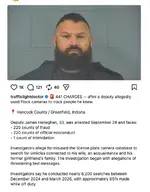
At the core, any company focuses on revenue and profit with little to zero conscience about how its used unless they find risk exposure and even that is weighed about the same way a sociopath would weigh their actions. Anything that says otherwise is a spinning yarn. The practical effect of Flock's network-based model is that data is widely shared across thousands of agencies. And, customers' camera data ending up accessible to many different law enforcement agencies through Flock's platform, even if it's technically not "sold.". And it is being interpreted and used in ways that are not ideal.
And before anyone says we are safer for it or dismiss it because our privacy was compromised long ago the second we accepted the terms of using our iPhone, consider this very different. First, Apple, Google etc have SO much more to lose financially with a bad actor compromising their data - I worked at Google for years and their controls are much more robust than the public sector, both controls and staffing. Bad actors in the public sector don't bankrupt a company, or send a stock tanking costing billions. Financial impact is so much more effective than reputation. Period.
Agencies with this data, while controlled still have bigger risk in their process and people.
View attachment 257818

They are focus on what they focus on…It's absolutely insane that the system is so sloppy it takes them YEARS to recognize infractions when they're counting the number of hairs on YOUR head every day.
Long discussion probably, but I'm not sure the question is so much how you use AI on the site so much as how your site is being used by AI that's the discussion to have.They are focus on what they focus on…
I see a lot of tech guys in this thread. What can we do to use AI for good in our site?
I’d like to pick some brains from the brain trust here.
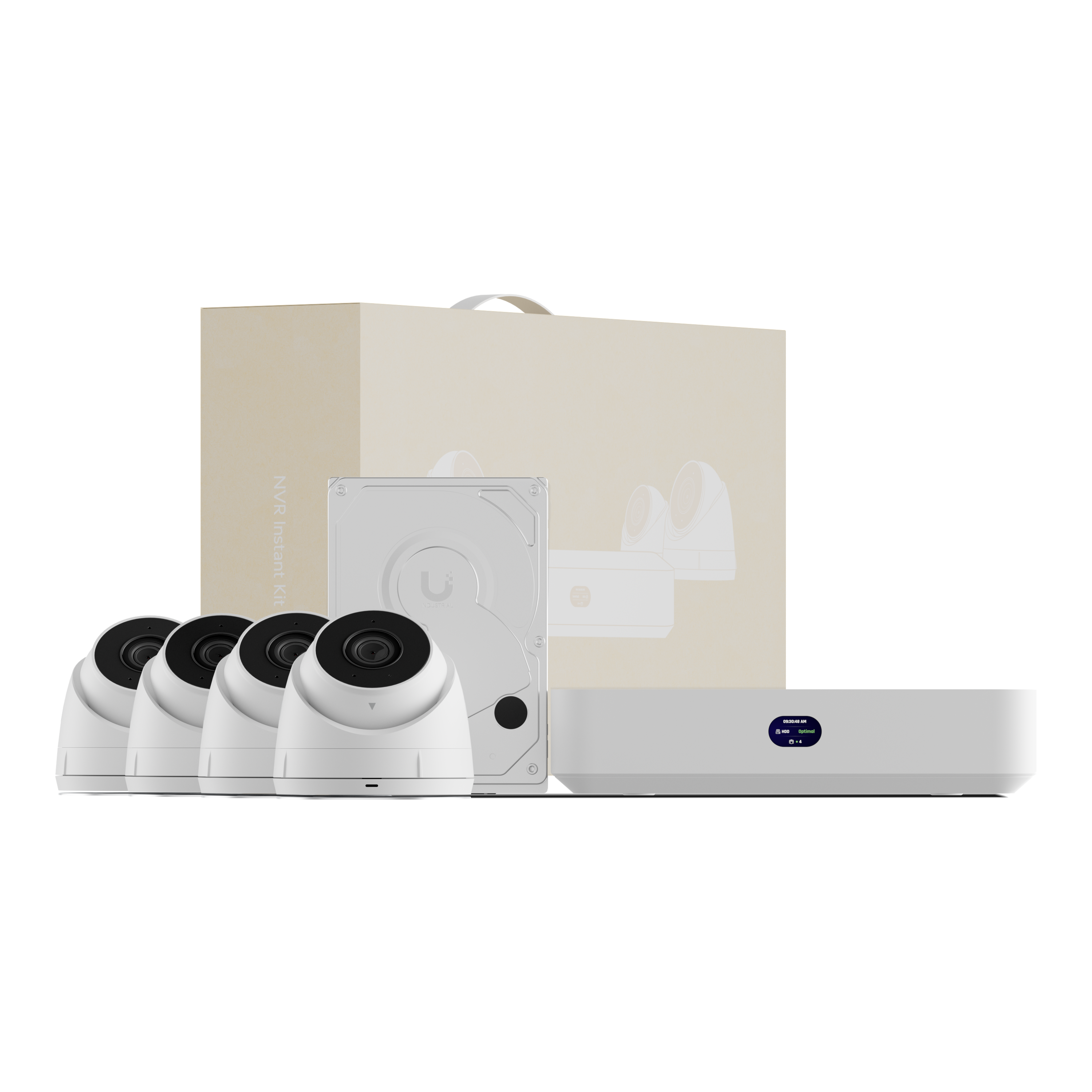
Related question: Anyone know a provider of cameras that have as good license place and face recognition as Flock/Motorola/Palantir/..., but don't use a cloud-based system?Does anyone know if you can volunteer to have Flock or Palantir cameras installed on your property to monitor your neighborhood?
Related question: Anyone know a provider of cameras that have as good license place and face recognition as Flock/Motorola/Palantir/..., but don't use a cloud-based system?
To be clear: I'm not anti-cloud, on the contrary. But I would like to install them in a location where internet access is somewhere between spotty, slow, and expensive, but I can provide a "private cloud" (big server and good local networking).
 store.ui.com


 www.techdirt.com
It seems not a lot of people know who and why created Palantir when it was turned to military and why specific companies under their control.I used Palantir for years before the public even knew about their software, I really loved it as an analyst lol

Honestly shows more how mentally retarded a lot of cops are than a system having an obvious errorDriver Ticketed For No Insurance Despite Having Insurance Just Because Flock Said She Didn’t
We’ve moved past cops doing stuff because a dog gave them permission to do it. Now, we’re at the post-truth era of policing, where cops will do stuff because a machine told them to do i…
"Prove you have insurance"
"Here you go"
"Flock (a private company) says you don't, here's your ticket. Fight it in court"
Welcome to America in 2026.
I shudder to think what could happen to someone that Flock flags incorrectly for a high risk/felony stop or as a violent offender.