18+ Content Warning

By clicking Enter, you confirm you are 18 years of age or older and agree to comply with all applicable local, state, and federal laws.

Notice: Any content or member activity - including anything you may buy, sell, transfer, or discuss - must comply with current and upcoming laws.

Members are encouraged to stay informed: California Firearm Laws: 2026 Outlook & 2025 Recap . Responsibility for compliance rests solely with the individual member.

caguns.net

Welcome to CAguns.net!
Join our growing community where you can ask questions, share knowledge, or browse our classifieds section.

Sign up for a free account today and unlock full access! Once registered, you can search, post, and take advantage of exclusive features unavailable to guests.

A note on why more of the site now requires an account: automated scrapers and AI systems have been crawling our forums and classifieds at a scale. Requiring sign-in for those sections is the most effective tool we have. It takes a minute to register, it's free, and it keeps what happens here between actual members.

New to California gun ownership or trying to keep up with the changing laws? Check out our sister site CA2A.com — free courses, plain-English legal updates, and step-by-step guides built for California owners.

Advanced features are available only to registered members. Register today!

  • 📢 Classifieds Update — Effective Monday, September 21

    Starting Monday, the free Classifieds ad limit will be lowered from 3 to 2 active ads.

    Verified accounts will keep their limit of 3. All other account limits stay the same.

    Existing ads are not affected and will remain up until they expire.

    Want to keep 3 listings and add features like removing comments and emojis? Upgrade/Verify your account

    More information here

Tips for Effective Dry Fire Target Practice

copap

⚠️ New Member | No Deposits ☢️
Messages
3
Hey everyone,

I’m looking to improve my accuracy and precision with dry fire target practice but would love some advice from those of you who have been practicing for a while. I understand that dry firing can be a valuable tool for building muscle memory and refining technique, but I’m unsure how to structure my practice to get the best results.

Here are some questions I have:
  • How do you ensure your form is correct during dry fire practice, especially for target acquisition and trigger control?
  • Are there any specific drills or routines you recommend for improving speed and accuracy without live ammo?
  • Do you use any tools (like laser training systems) or targets to help with dry fire practice?
  • How long do you typically dry fire in a session, and how often do you practice?
Any tips or insights would be greatly appreciated!
Hey everyone,

I’m looking to improve my accuracy and precision with dry fire target practice but would love some advice from those of you who have been practicing for a while. I understand that dry firing can be a valuable tool for building muscle memory and refining technique, but I’m unsure how to structure my practice to get the best results.

Here are some questions I have:
  • How do you ensure your form is correct during dry fire practice, especially for target acquisition and trigger control?
  • Are there any specific drills or routines you recommend for improving speed and accuracy without live ammo?
  • Do you use any tools (like laser training systems) or targets to help with dry fire practice?
  • How long do you typically dry fire in a session, and how often do you practice?

Any tips or insights would be greatly appreciated!
 
Hey everyone,

I’m looking to improve my accuracy and precision with dry fire target practice but would love some advice from those of you who have been practicing for a while. I understand that dry firing can be a valuable tool for building muscle memory and refining technique, but I’m unsure how to structure my practice to get the best results.

Here are some questions I have:
  • How do you ensure your form is correct during dry fire practice, especially for target acquisition and trigger control?
  • Are there any specific drills or routines you recommend for improving speed and accuracy without live ammo?
  • Do you use any tools (like laser training systems) or targets to help with dry fire practice?
  • How long do you typically dry fire in a session, and how often do you practice?
Any tips or insights would be greatly appreciated!
Hey everyone,

I’m looking to improve my accuracy and precision with dry fire target practice but would love some advice from those of you who have been practicing for a while. I understand that dry firing can be a valuable tool for building muscle memory and refining technique, but I’m unsure how to structure my practice to get the best results.

Here are some questions I have:
  • How do you ensure your form is correct during dry fire practice, especially for target acquisition and trigger control?
  • Are there any specific drills or routines you recommend for improving dry fire target practice speed and accuracy without live ammo?
  • Do you use any tools (like laser training systems) or targets to help with dry fire practice?
  • How long do you typically dry fire in a session, and how often do you practice?

Any tips or insights would be greatly appreciated!
thanks in advance for any help
 
It doesn't need to be elaborate. Put a piece of painter's tape on a wall or door, practice drawing, acquiring the target, squeeze the trigger, note how it felt (was it a smooth pull, did you jerk it one way or another, etc.), cycle the slide enough to make it ready, reholster, repeat.

It do this a few times a week during down time after dinner for anywhere from 30 to 60 minutes.

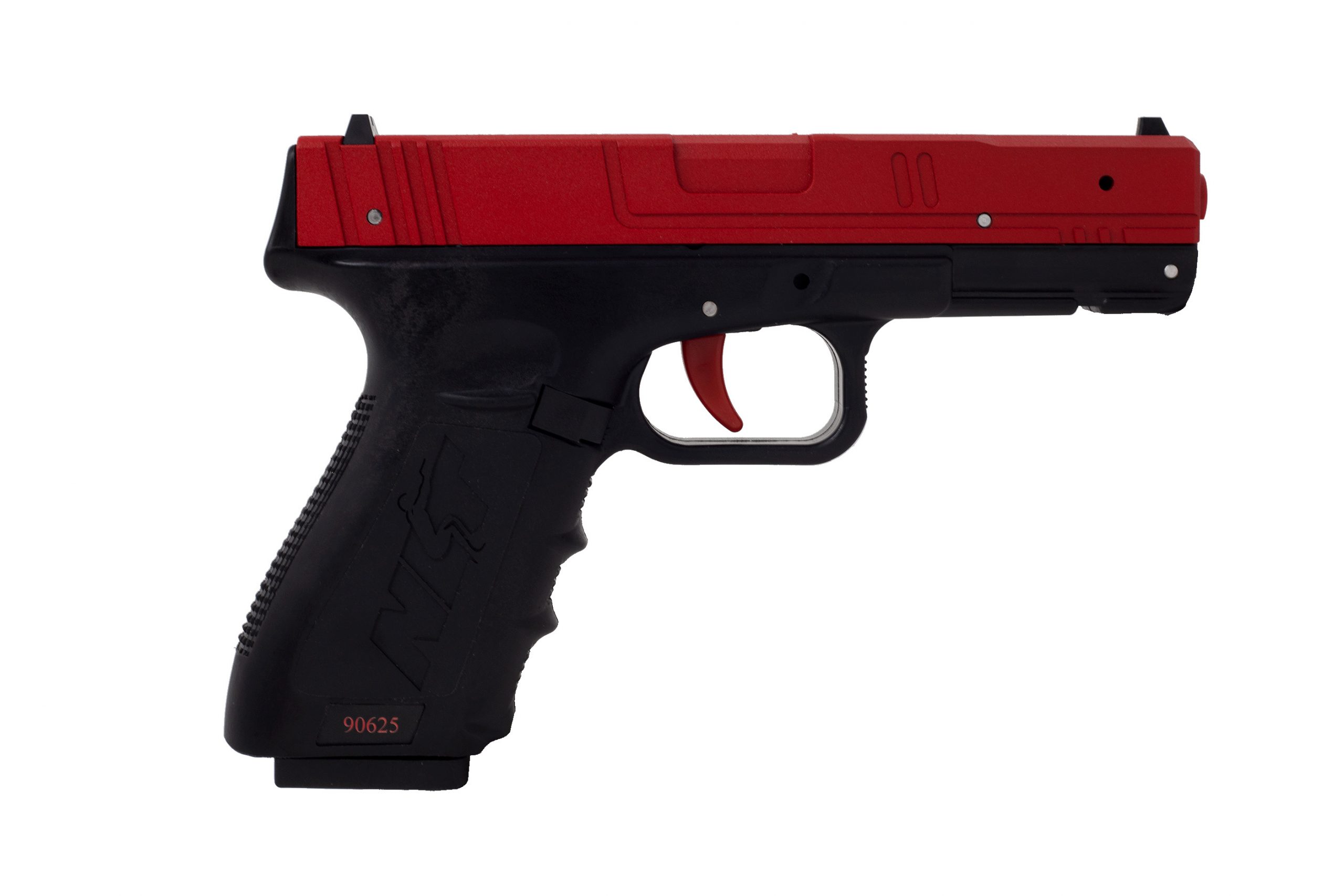
I just got a Strikeman and like it so far after one session with it. It's good to have a little more feedback now knowing if I'm actually on target when I pull the trigger. The tape on the wall was good, but I see the value in having a little more information about my shots.

But, kudos to you for wanting to improve. Too many people buy a gun and only pick it up when they go to the range once a year.

Oh, I also downloaded the Dry Fire Timer app. Just something to help with getting proficient with drawing from holstered.

Another thing I do....reloading. A variation of drawing from holster, acquiring target and pulling the trigger, dropping the mag, drawing the spare from my holster (making sure I'm indexing properly), and reloading. I may rack the slide back after pulling the trigger so that I can simulate dropping the mag, reloading, and hitting the slide release. Since I have a CCW, I want to make sure I'm proficient in reloading, making it as more muscle memory as possible.
 
Last edited:
Most critical thing is to remove all live ammunition from the room when dry firing. Take NO CHANCES with negligent or accidental discharges.

After that I'd say the most important thing is to dry fire regularly, every day ideally. Even if it is just for a couple minutes, or even just a couple dry fires a day. The constant practice will help to train your fine motor control and eyes to what you need to see. More is better obviously, but if you try to force yourself to dry fire for 30 mins to begin with and you find that to be a tiresome amount, then you'll never get in the habit of dry firing. Some practice is far better than no practice, so start with just a few dry fires a day, and you might find it fun and willingly make your practice sessions longer.

Some days I snap the trigger just 5 times with my carry gun two handed, 5 times strong hand, 5 times weak hand, 5 times again two handed, and that's it for the day.

The most critical way in which dry firing will help you is by practicing trigger control without disturbing the sights. Dry fire with two hands and ensure the sights do not move when pulling the trigger. Dry fire strong hand only, then weak hand only, then go back to two hands. Do some holster work, go slow and focus on perfect form before adding speed. Try some tactical mag changes or speed reloads, again focusing on clean form before adding speed. Any bobble or mistakes then slow back down to where you can achieve perfect form. Dummy cartridges or snap caps are ideal for practicing reloads, and in my opinion are the only equipment necessary for dry fire practice. Consider recording yourself with your phone to watch your draw or reloading from an outside perspective.

If you dry fire practice religiously before your next range session you will be amazed at what a positive difference will be made when you shoot again.

EDIT: I forgot to address grip. Not saying this is the best way to do it, but I use a roughly 70/30 grip with some push/pull. This means I grip mostly with my support hand and my firing hand is far more relaxed, and I push forward with my firing hand and pull back with my support hand. However you grip the pistol, practice your grip the exact same way in dry fire as you would in live fire, with all the same pressures and tensions necessary for you to effectively control recoil.

Stay safe and have fun!
 
Last edited:
my wife bought me a Strikeman dry fire kit, while not necessary, I do think it is a valuable tool. Even adding a laser bullet can help
 
Couple clarifying questions that might help folks provide more tailored responses:

What are you dry firing with?

You mention wanting to increase your accuracy and precision, but then also mention speed further down. What do you want to improve the speed of?
 
There was a great website … I think it was pistol.com with amazing drills. The guy died and all the info is gone. I downloaded a few drills at the advise of James Yeom of T-3 Pros.
One was the wall drill. After removing all ammo from room and clearing weapon visually and physically, hold the pistol 1” from a wall and practice pulling the trigger without moving the sights. No target needed.
There are variations for a 30 day , very basic dry fire routine involving moving from high ready, strong and hand weak drills and drawing from the holster.
Live fire and then adjust how you dry fire.

The greatest shooters don’t use gizmos.

If you get some good in person instruction and have gotten into shooting on the move , drawing from the holster , rapid fire drills etc , then you can move on to some books:

I use Ben Stoegers Dry Fire Reloaded along with his 1/4 scale targets. I think book and target deals can be had for $25-30.

Steve Anderson’s Repetition and Refinement has been hugely helpful focusing on Classifier skills.

Both books have logs for you to mark your par times and see improvement over time.

For less than the price of a laser set up or Mantis X, you can get a book , targets and a shot timer.
 
Last edited:
Hey everyone,

I’m looking to improve my accuracy and precision with dry fire target practice but would love some advice from those of you who have been practicing for a while. I understand that dry firing can be a valuable tool for building muscle memory and refining technique, but I’m unsure how to structure my practice to get the best results.

Here are some questions I have:
  • How do you ensure your form is correct during dry fire practice, especially for target acquisition and trigger control?
  • Are there any specific drills or routines you recommend for improving speed and accuracy without live ammo?
  • Do you use any tools (like laser training systems) or targets to help with dry fire practice?
  • How long do you typically dry fire in a session, and how often do you practice?
Any tips or insights would be greatly appreciated!
Hey everyone,

I’m looking to improve my accuracy and precision with dry fire target practice but would love some advice from those of you who have been practicing for a while. I understand that dry firing can be a valuable tool for building muscle memory and refining technique, but I’m unsure how to structure my practice to get the best results.

Here are some questions I have:
  • How do you ensure your form is correct during dry fire practice, especially for target acquisition and trigger control?
  • Are there any specific drills or routines you recommend for improving speed and accuracy without live ammo?
  • Do you use any tools (like laser training systems) or targets to help with dry fire practice?
  • How long do you typically dry fire in a session, and how often do you practice?

Any tips or insights would be greatly appreciated!
All really good questions to ask when just starting off.

* Live fire is basically a way to verify that what you are doing in dry fire is correct. Unfortunately, there's not really any way around it, but you'll have to develop a solid grip through live fire training first, and this usually takes a lot of experimentation, which means a lot of rounds downrange = money. To remain consistent, your dry fire grip and live fire grip have to be the same. If you do a 💩 ton of dry fire with the wrong grip, you are just building bad habits and hindering your progress. Basically, you want to go to the range, find what works, then mimic that in dry fire. During your dry fire practice, you can start to speed things up and really start to push yourself, so long as you aren't getting sloppy with your grip.

Trigger control is kind of like grip: everyone has their own take on it. Some prep, some roll, some slap... In reality, there are different methods of pressing the trigger, and this is usually dependent on the difficulty (size and distance) of the target. If you're close up and the target is big, you can get away with a pretty aggressive trigger press. As the difficulty of the target increases, you need to have a bit more finesse with your trigger. If it's a drill you're looking for, Trigger Control At Speed is my personal go to. As others have said, it comes down to being able to press the trigger without disturbing the sights.

* Watch anything from Ben Stoeger, Joel Park, and Joe Farewell, amongst others. Stoeger's books are a great start. Like anything else, there's a lot of great advice on the web, but there's a lot of crap also. In general, the guys who are winning matches are the ones you want to learn to shoot from, not the guy who was a SWAT cop in 1992.

* I've bought and used the Mantis, SIRT pistols, Dry Fire Mags, and just about anything else. They are mostly all just gimmicks for the purposes of practical shooting. If your goal is to shoot x's at 50 yards with a pistol, that's a different story. Now, I just use the pistol I compete with and a weighted magazine.

* Dry fire sessions should be short and focused, with a specific training goal in mind. For me, I'm good for no more than 30 minutes, then I start to zone out. That tells me that it's time to put the gun down and take a break. That said, there are times when I haven't touched a gun in a while. If that's the case, I usually don't have a specific goal in mind, I'll just run a bunch of drills to get me back into the swing of things.

Good luck!

Edit: And get a shot timer!!!
 
All really good questions to ask when just starting off.

* Live fire is basically a way to verify that what you are doing in dry fire is correct. Unfortunately, there's not really any way around it, but you'll have to develop a solid grip through live fire training first, and this usually takes a lot of experimentation, which means a lot of rounds downrange = money. To remain consistent, your dry fire grip and live fire grip have to be the same. If you do a 💩 ton of dry fire with the wrong grip, you are just building bad habits and hindering your progress. Basically, you want to go to the range, find what works, then mimic that in dry fire. During your dry fire practice, you can start to speed things up and really start to push yourself, so long as you aren't getting sloppy with your grip.

Trigger control is kind of like grip: everyone has their own take on it. Some prep, some roll, some slap... In reality, there are different methods of pressing the trigger, and this is usually dependent on the difficulty (size and distance) of the target. If you're close up and the target is big, you can get away with a pretty aggressive trigger press. As the difficulty of the target increases, you need to have a bit more finesse with your trigger. If it's a drill you're looking for, Trigger Control At Speed is my personal go to. As others have said, it comes down to being able to press the trigger without disturbing the sights.

* Watch anything from Ben Stoeger, Joel Park, and Joe Farewell, amongst others. Stoeger's books are a great start. Like anything else, there's a lot of great advice on the web, but there's a lot of crap also virtual shooting range. In general, the guys who are winning matches are the ones you want to learn to shoot from, not the guy who was a SWAT cop in 1992.

* I've bought and used the Mantis, SIRT pistols, Dry Fire Mags, and just about anything else. They are mostly all just gimmicks for the purposes of practical shooting. If your goal is to shoot x's at 50 yards with a pistol, that's a different story. Now, I just use the pistol I compete with and a weighted magazine.

* Dry fire sessions should be short and focused, with a specific training goal in mind. For me, I'm good for no more than 30 minutes, then I start to zone out. That tells me that it's time to put the gun down and take a break. That said, there are times when I haven't touched a gun in a while. If that's the case, I usually don't have a specific goal in mind, I'll just run a bunch of drills to get me back into the swing of things.

Good luck!

Edit: And get a shot timer!!!
thank you so much for your suggestion
 
I personally use these, I like em so much we started stocking them at the store. Only 9 and 223 right now but for me that works! Great for practicing draw, speed, accuracy
 
Back
Top Bottom