

- Messages
- 6,183
- Classified ads
- 1
Curious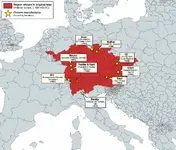
By clicking Enter, you confirm you are 18 years of age or older and agree to comply with all applicable local, state, and federal laws.
Notice: Any content or member activity - including anything you may buy, sell, transfer, or discuss - must comply with current and upcoming laws.
Members are encouraged to stay informed: California Firearm Laws: 2026 Outlook & 2025 Recap . Responsibility for compliance rests solely with the individual member.



CAGuns ain't paying me to make maps (yet)Don’t forget the tentacle which is FN in Herstal Belgium.
| Region | Historic strength |
|---|---|
| Germany | Precision sporting rifles, shotguns, engineering-led production |
| Austria | Bespoke hunting guns and elaborate hand finishing |
| Czech lands | Industrial arms manufacturing and engineering |
| Switzerland | Precision engineering and military firearms |
| Belgium | Major historic firearms center, particularly Liège |
| United Kingdom | Fine sporting shotguns and bespoke rifles |
| Italy | Luxury shotguns and sporting firearms |
| Spain | Traditional sporting guns, especially around Eibar |

This would make for a badass poster.
Lol love the political correctness they sprinkle inAccording to Chat GPT
The reason so much heritage firearm manufacturing is concentrated in Central Europe—particularly Germany, Austria,Switzerland, and the Czech lands—is that the region developed an unusually strong combination of precisionmetalworking, specialist guild traditions, military demand, and skilled family-owned workshops. These industriesreinforced one another over centuries.
It wasn't simply that Central Europeans were better at making firearms. The region had the right industrial and politicalconditions for producing exceptionally refined weapons, and many of those capabilities survived into the modern era.
Germany: a centuries-old gunsmithing ecosystem
Towns such as Suhl and Zella-Mehlis developed dense networks of gunsmiths, barrel makers, lock makers, engravers, andtoolmakers. Specialized labor made it possible to produce complex firearms without every workshop having to masterevery process.
Austria: the guild and hunting traditions
Ferlach became renowned for custom hunting firearms. Its craft tradition emphasizes individually fitted actions, finewoodwork, engraving, and hand finishing—skills that remain commercially valuable in the luxury sporting-gun market.
The Czech lands: skilled labor and industrial scale
Brno and other Bohemian and Moravian industrial centers developed strong engineering and metalworking industries.The region could support both mass production and sophisticated specialist manufacturing.
Switzerland: precision engineering
Switzerland's broader tradition of fine mechanics, machine tools, and precision manufacturing supported high-qualityarms production. Its firearms reputation is part of a larger engineering culture, rather than an isolated gunsmithingtradition.
Three factors helped these manufacturing centers emerge and persist.
- Natural resources. Iron ore, forests for charcoal, and waterpower supported early metalworking. Suhl is aparticularly clear example: its mining and ironworking industries provided the foundation for its gunsmithing trade.
Merkel
+1
- Political fragmentation. Central Europe historically contained many principalities, kingdoms, and independentcities. Their rulers and armies needed weapons, creating multiple sources of demand and allowing specialistproduction centers to emerge.
- Dense networks of specialists. Rather than relying on one universal craftsman, traditional firearms production drewon separate experts in metalwork, woodwork, engraving, and assembly. Ferlach's craft tradition still reflects thisdivision of labor.
Österreichische UNESCO-Kommission
+1
This transition is one of the most important parts of the story.
For centuries, European armies provided large contracts for muskets, rifles, and other weapons. That demand helpeddevelop skilled labor, production capacity, and specialist suppliers. Suhl, for example, was already producing firearms ona substantial scale in the 17th century.
GHI Washington
+1
But military demand was not always dependable. Wars ended, governments changed their procurement policies, and newtechnologies made older products obsolete.
Hunting and sporting firearms offered a different market. Wealthy customers were willing to pay for craftsmanship,individual fitting, elaborate engraving, and traditional designs. In Ferlach, production shifted toward hunting weapons asstate purchases declined during the 19th century.
Österreichische UNESCO-Kommission
+1
That shift helped preserve skills that might otherwise have disappeared.
Traditional gunmaking was never entirely separate from modern industry. Its enduring advantage was the ability tocombine precision machinery with specialist handwork.
The history of Merkel in Suhl illustrates this combination: its manufacturing tradition draws on both modern industrialprocesses and inherited handcraft skills.
- Machine tools made dimensions more consistent and production more efficient.
- Generations of experienced craftspeople preserved knowledge that was difficult to capture in technical drawingsalone.
- Established reputations helped manufacturers sell internationally.
- Family businesses and specialist workshops could focus on premium products instead of competing entirely onprice.
Merkel
+1
Not exclusively. The distinction is between the broader firearms industry and the particular tradition of high-end,historically rooted craftsmanship.
Belgium, Britain, Italy, and Spain are essential parts of this history, too. Liège and Birmingham were particularlyimportant European firearms centers, so Central Europe did not have a monopoly on the craft.
Region Historic strength Germany Precision sporting rifles, shotguns, engineering-led production Austria Bespoke hunting guns and elaborate hand finishing Czech lands Industrial arms manufacturing and engineering Switzerland Precision engineering and military firearms Belgium Major historic firearms center, particularly Liège United Kingdom Fine sporting shotguns and bespoke rifles Italy Luxury shotguns and sporting firearms Spain Traditional sporting guns, especially around Eibar
German Hunting Guns
+1
Central Europe's advantage is cumulative industrial heritage. Early metalworking created the conditions for gunsmithing;military contracts expanded the trade; generations of specialists refined it; and premium hunting and sporting marketshelped sustain it after military demand changed.
Once a region develops that ecosystem, it is difficult to reproduce elsewhere. The machinery can be purchased, but theaccumulated expertise, specialist suppliers, training traditions, and reputation take generations to build.
Dont forget this entire region wasn't defined by these specific countries in the 1800s, it was many tiny kingdoms and regions that were constantly at war and changing borders.According to Chat GPT
The reason so much heritage firearm manufacturing is concentrated in Central Europe—particularly Germany, Austria,Switzerland, and the Czech lands—is that the region developed an unusually strong combination of precisionmetalworking, specialist guild traditions, military demand, and skilled family-owned workshops. These industriesreinforced one another over centuries.
It wasn't simply that Central Europeans were better at making firearms. The region had the right industrial and politicalconditions for producing exceptionally refined weapons, and many of those capabilities survived into the modern era.
Germany: a centuries-old gunsmithing ecosystem
Towns such as Suhl and Zella-Mehlis developed dense networks of gunsmiths, barrel makers, lock makers, engravers, andtoolmakers. Specialized labor made it possible to produce complex firearms without every workshop having to masterevery process.
Austria: the guild and hunting traditions
Ferlach became renowned for custom hunting firearms. Its craft tradition emphasizes individually fitted actions, finewoodwork, engraving, and hand finishing—skills that remain commercially valuable in the luxury sporting-gun market.
The Czech lands: skilled labor and industrial scale
Brno and other Bohemian and Moravian industrial centers developed strong engineering and metalworking industries.The region could support both mass production and sophisticated specialist manufacturing.
Switzerland: precision engineering
Switzerland's broader tradition of fine mechanics, machine tools, and precision manufacturing supported high-qualityarms production. Its firearms reputation is part of a larger engineering culture, rather than an isolated gunsmithingtradition.
Three factors helped these manufacturing centers emerge and persist.
- Natural resources. Iron ore, forests for charcoal, and waterpower supported early metalworking. Suhl is aparticularly clear example: its mining and ironworking industries provided the foundation for its gunsmithing trade.
Merkel
+1
- Political fragmentation. Central Europe historically contained many principalities, kingdoms, and independentcities. Their rulers and armies needed weapons, creating multiple sources of demand and allowing specialistproduction centers to emerge.
- Dense networks of specialists. Rather than relying on one universal craftsman, traditional firearms production drewon separate experts in metalwork, woodwork, engraving, and assembly. Ferlach's craft tradition still reflects thisdivision of labor.
Österreichische UNESCO-Kommission
+1
This transition is one of the most important parts of the story.
For centuries, European armies provided large contracts for muskets, rifles, and other weapons. That demand helpeddevelop skilled labor, production capacity, and specialist suppliers. Suhl, for example, was already producing firearms ona substantial scale in the 17th century.
GHI Washington
+1
But military demand was not always dependable. Wars ended, governments changed their procurement policies, and newtechnologies made older products obsolete.
Hunting and sporting firearms offered a different market. Wealthy customers were willing to pay for craftsmanship,individual fitting, elaborate engraving, and traditional designs. In Ferlach, production shifted toward hunting weapons asstate purchases declined during the 19th century.
Österreichische UNESCO-Kommission
+1
That shift helped preserve skills that might otherwise have disappeared.
Traditional gunmaking was never entirely separate from modern industry. Its enduring advantage was the ability tocombine precision machinery with specialist handwork.
The history of Merkel in Suhl illustrates this combination: its manufacturing tradition draws on both modern industrialprocesses and inherited handcraft skills.
- Machine tools made dimensions more consistent and production more efficient.
- Generations of experienced craftspeople preserved knowledge that was difficult to capture in technical drawingsalone.
- Established reputations helped manufacturers sell internationally.
- Family businesses and specialist workshops could focus on premium products instead of competing entirely onprice.
Merkel
+1
Not exclusively. The distinction is between the broader firearms industry and the particular tradition of high-end,historically rooted craftsmanship.
Belgium, Britain, Italy, and Spain are essential parts of this history, too. Liège and Birmingham were particularlyimportant European firearms centers, so Central Europe did not have a monopoly on the craft.
Region Historic strength Germany Precision sporting rifles, shotguns, engineering-led production Austria Bespoke hunting guns and elaborate hand finishing Czech lands Industrial arms manufacturing and engineering Switzerland Precision engineering and military firearms Belgium Major historic firearms center, particularly Liège United Kingdom Fine sporting shotguns and bespoke rifles Italy Luxury shotguns and sporting firearms Spain Traditional sporting guns, especially around Eibar
German Hunting Guns
+1
Central Europe's advantage is cumulative industrial heritage. Early metalworking created the conditions for gunsmithing;military contracts expanded the trade; generations of specialists refined it; and premium hunting and sporting marketshelped sustain it after military demand changed.
Once a region develops that ecosystem, it is difficult to reproduce elsewhere. The machinery can be purchased, but theaccumulated expertise, specialist suppliers, training traditions, and reputation take generations to build.

Jeez you guys act like I got paid to make this lmaoThis map should include Manurhin.
Just find someone to billJeez you guys act like I got paid to make this lmao

Thanks!This would make for a badass poster.
And I'm gonna be taking my percentage, Gawer!Just find someone to bill
See you in courtAnd I'm gonna be taking my percentage, Gawer!