
- Messages
- 1,228
- Classified ads
- 1
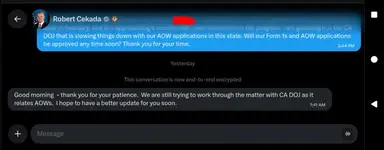
Something else to consider occurred to me which is estate planning. What happens upon the death of an NFA item owner?Yes, to piggyback off what @cali_jazz said, having an AOW will severely restrict any potential resale due to the fact that you'd need an FFL/SOT of which there are only a few willing to deal with the public in our state and also of course we still have to deal with the ATF not approving AOW stamps still. Though I do have a good feeling something may actually get done here or something gets loose at least, having an AOW in the state of California is a lesson in civics and laws itself. I would not recommend getting an AOW unless you're comfortable with keeping the firearm potentially for the rest of your life. For me, that's okay because the Serbu Super Shorty is SUPER rare and only 6k were ever made and they have a legendary reputation and this is most definitely heirloom material.
But yeah everything else Cali Jazz said is completely 100% on point. Consider all angles before going down this road. Also research lawyers just in case.
ChatGPT gave me the following information which talks about NFA trusts
Under federal law, the AOW doesn't simply become another firearm that your heirs can take possession of. The executor of the estate may generally possess it while administering the estate, but before it can be transferred to an heir, an ATF Form 5 (tax-exempt transfer) must be approved. The heir cannot legally take possession until that approval is received.
The California side is where things become less clear. California has an exemption for federally registered AOWs (PC 17710), but I have not been able to find any published California statute, DOJ guidance, or court decision that specifically answers whether a California heir may inherit one through the federal Form 5 process. That doesn't necessarily mean they can't—it simply means there doesn't appear to be a clear published answer.
If no lawful California transfer is available, the executor may instead have to transfer the firearm to someone who can legally possess it (such as an out-of-state buyer where legal), or otherwise lawfully dispose of it. It's not something your heirs can simply divide up like an ordinary firearm.
This is just another practical consideration to add to the list.