18+ Content Warning

By clicking Enter, you confirm you are 18 years of age or older and agree to comply with all applicable local, state, and federal laws.

Notice: Any content or member activity - including anything you may buy, sell, transfer, or discuss - must comply with current and upcoming laws.

Members are encouraged to stay informed: California Firearm Laws: 2026 Outlook & 2025 Recap . Responsibility for compliance rests solely with the individual member.

caguns.net

Welcome to CAguns.net!
Join our growing community where you can ask questions, share knowledge, or browse our classifieds section.

Sign up for a free account today and unlock full access! Once registered, you can search, post, and take advantage of exclusive features unavailable to guests.

A note on why more of the site now requires an account: automated scrapers and AI systems have been crawling our forums and classifieds at a scale. Requiring sign-in for those sections is the most effective tool we have. It takes a minute to register, it's free, and it keeps what happens here between actual members.

New to California gun ownership or trying to keep up with the changing laws? Check out our sister site CA2A.com — free courses, plain-English legal updates, and step-by-step guides built for California owners.

Advanced features are available only to registered members. Register today!

  • 📢 Classifieds Update — Effective Monday, September 21

    Starting Monday, the free Classifieds ad limit will be lowered from 3 to 2 active ads.

    Verified accounts will keep their limit of 3. All other account limits stay the same.

    Existing ads are not affected and will remain up until they expire.

    Want to keep 3 listings and add features like removing comments and emojis? Upgrade/Verify your account

    More information here

PPT where the buyer gets denied.

We had a discussion thread roughly similar to this one a few years ago on the other discussion forum for California gun nuts.

That thread discussed the circumstances of a California resident who purchased on off-roster handgun from a gun auction site, and then sought advise as what to do when he learned that a California FFL could not transfer it to him.

His first effort was to rescind the sale and get his money back, but the seller had a "No Refund" policy that was stated in the listing.

A lot of the comments focused on the differences between "ownership" and "transfer" as those terms pertain to firearms. The net conclusion was that the gent was now the owner (which was permitted by law and the circumstances) of a firearm that he could not legally take possession of. The same may be true in the case being discussed here.

Many of the prior postings seem to assume that the fact that a person has been denied by DOJ equates to their being a prohibited person, and infer that buyer is to be faulted for attempting the purchase. I've been through enough faulty criminal history returns from DOJ to believe otherwise. A lot of errors result from folks having a common name with a prohibited person (and this becomes even more profound when dealing with hyphenated hispanic names), or where there is an incomplete record (like a gent who got arrested 20 years ago and the court clerk didn't enter a disposition into the record).
 
Last edited:

We had a discussion thread roughly similar to this one a few years ago on the other discussion forum for California gun nuts.

That thread discussed the circumstances of a California resident who purchased on off-roster handgun from a gun auction site, and then sought advise as what to do when he learned that a California FFL could not transfer it to him.

His first effort was to rescind the sale and get his money back, but the seller had a "No Refund" policy that was stated in the listing.

A lot of the comments focused on the differences between "ownership" and "transfer" as those terms pertain to firearms. The net conclusion was that the gent was now the owner (which was permitted by law and the circumstances) of a firearm that he could not legally take possession of. The same may be true in the case being discussed here.

Many of the prior postings seem to assume that the fact that a person has been denied by DOJ equates to their being a prohibited person, and infer that buyer is to be faulted for attempting the purchase. I've been through enough faulty criminal history returns from DOJ to believe otherwise. A lot of errors result from folks having a common name with a prohibited person (and this becomes even more profound when dealing with hyphenated hispanic names), or where there is an incomplete record (like a gent who got arrested 20 years ago and the court clerk didn't enter a disposition into the record).
Now being from the state of California. If a DROS is rejected. Doesn’t that mean the registration of ownership remains the seller? Since a DROS literally means the Dealers Registration Of Sale.
 
Now being from the state of California. If a DROS is rejected. Doesn’t that mean the registration of ownership remains the seller? Since a DROS literally means the Dealers Registration Of Sale.
Actually "No".

Please keep in mind that the Automated Firearms System (AFS) is a historical database, it's not an active registry. All the historical database does is to collect a series of events that occurred on given dates. The DROS is one of the documents that feed information into the AFS (some others being the Voluntary Registration and Personal Importer Reports). An active registry, like the DMV's Vehicle Registration system work differently. In a registry, folks are required to report changes in status and that permits the system to be used to determine the current status of the registered object. It's like the difference between a still photograph and a motion picture.

The AFS does not "register ownership" it only records that a weapon was transferred to an individual on a particular date.

In this case, if the PPT transfer fails to complete, the most recent record in the AFS database would likely be the record of transfer, registration, or importation to the seller.
 
Last edited:
Actually "No".

Please keep in mind that the Automated Firearms System (AFS) is a historical database, it's not an active registry. All the historical database does is to collect a series of events that occurred on given dates. The DROS is one of the documents that feed information into the AFS (some others being the Voluntary Registration and Personal Importer Reports). An active registry, like the DMV's Vehicle Registration system work differently. In a registry, folks are required to report changes in status and that permits the system to be used to determine the current statues of the registered object. It's like the difference between a still photograph and a motion picture.

The AFS does not "register ownership" it only records that a weapon was transferred to an individual on a particular date.

In this case, if the PPT transfer fails to complete, the most recent record in the AFS database would likely be the record of transfer, registration, or importation to the seller.
That was my reasoning in post #44.

Someone said there’s a statutory provision providing that legal ownership doesn’t actually transfer from the seller until a buyer successfully completes DROS. I couldn’t find any legal authority in the linked source, so I don’t know if that’s accurate or not.

But I do think there’s confusion between ownership, in a legal sense, and association in AFS.

This is a very good technical explanation.

Edit: I was just reading PC 28050 which outlines PPT procedures. It does say, in the case of a failed seller DROS, the FFL can return the firearm to the seller. But nothing there says it supersedes other laws. Based on that, I stand by what I said in post # 44. In the case of a failed DROS, a seller probably has a legal obligation to refund the buyer, unless there was an agreement saying otherwise.
 
Last edited:
That was my reasoning in post #44.

Someone said there’s a statutory provision providing that legal ownership doesn’t actually transfer from the seller until a buyer successfully completes DROS. I couldn’t find any legal authority in the linked source, so I don’t know if that’s accurate or not.

But I do think there’s confusion between ownership, in a legal sense, and association in AFS.

This is a very good technical explanation.

Edit: I was just reading PC 28050 which outlines PPT procedures. It does say, in the case of a failed seller DROS, the FFL can return the firearm to the seller. But nothing there says it supersedes other laws. Based on that, I stand by what I said in post # 44. In the case of a failed DROS, a seller probably has a legal obligation to refund the buyer, unless there was an agreement saying otherwise.
I agree. This is why every dealer makes you sign their contract saying something like you owe a 25% restocking fee or a $300 fee or whatever they decide if you fail background check.

Always get agreements in writing when you can
 
Or he didn't put his SS # on the dros and he has a name of someone who's flagged and just needs to differentiate himself.
There is NO ability to put the SSN on a DROS (except as a random comment, there is NO field) and there is NEVER a reason to put the SSN on the 4473, it isn't used. CA uses the CA ID/DL or military ID to uniquely determine who the person is. Only if there was a case of identity theft where the person got arrested would there be a problem with who the person is, no issues with name matches.

Realize that there any many reasons to get a rejection, such as in one case the person owed money to the DMV. CA will do anything that they can to force people to pay, even if it might not actually be legal. If you can't pay the DMV, what are the odds that you can pay an attorney to sue them?

As to the money issue, if the FFL gets involved in finding the buyer or seller or gets involved in the price, then sales tax is owed. Due to that some FFLs get weird about the payment occurring inside, which is absurd, but it is the nature of people, that alone doesn't cause it to magically be subject to sales tax. You might be able to talk sense into them, but that isn't likely due to their baseless requirement that money is exchanged outside. Personally, it seems like there is more of an issue with two people doing unknown things outside, especially when exchanging things or a firearm is seen. A reasonable, rational thing is to have both people do everything where they can be seen and you know what is going on, or if that is unacceptable for unknown reasons, to be completely out of the area doing such things so as to avoid someone calling the police and all that could involve, including bullets going in random directions (not from the two people involved). Do you really want the police called and when they arrive they found out the armed people entered the business? They could assume it was just a transfer, or more likely think that the two people are attempting to rob the place, which might create quite a few problems when there was none before.
 
Now being from the state of California. If a DROS is rejected. Doesn’t that mean the registration of ownership remains the seller? Since a DROS literally means the Dealers Registration Of Sale.
What matters is the law with respect to what can happen with the firearm. The buyer has no say.

The firearm can be returned to the seller, the seller can request a 45 day dealer hold or the firearm is to be turned over to law enforcement to dispose of it. That is the law.

Issues regarding refunds are a completely different issue, which is why when you sell a firearm you should make it very clear as to what will occur, such as a refund, no refund until it is sold again, the amount to be deducted, whether to seller will recover the firearm, etc. This isn't simple contract law since the restrictions as to what can happen to the property is limited by law. In normal contract law the contract is done when the money and the firearm is exchanged. If the DROS is denied, so that the buyer can not receive the firearm, if the seller can't or won't pick up the firearm for whatever reason, would the seller be responsible to refund the money when the seller ends up not getting it back? What obligation does the seller actually have to recover the firearm?
 
There is NO ability to put the SSN on a DROS (except as a random comment, there is NO field) and there is NEVER a reason to put the SSN on the 4473, it isn't used. CA uses the CA ID/DL or military ID to uniquely determine who the person is. Only if there was a case of identity theft where the person got arrested would there be a problem with who the person is, no issues with name matches.

Realize that there any many reasons to get a rejection, such as in one case the person owed money to the DMV. CA will do anything that they can to force people to pay, even if it might not actually be legal. If you can't pay the DMV, what are the odds that you can pay an attorney to sue them?

As to the money issue, if the FFL gets involved in finding the buyer or seller or gets involved in the price, then sales tax is owed. Due to that some FFLs get weird about the payment occurring inside, which is absurd, but it is the nature of people, that alone doesn't cause it to magically be subject to sales tax. You might be able to talk sense into them, but that isn't likely due to their baseless requirement that money is exchanged outside. Personally, it seems like there is more of an issue with two people doing unknown things outside, especially when exchanging things or a firearm is seen. A reasonable, rational thing is to have both people do everything where they can be seen and you know what is going on, or if that is unacceptable for unknown reasons, to be completely out of the area doing such things so as to avoid someone calling the police and all that could involve, including bullets going in random directions (not from the two people involved). Do you really want the police called and when they arrive they found out the armed people entered the business? They could assume it was just a transfer, or more likely think that the two people are attempting to rob the place, which might create quite a few problems when there was none before.
 

Attachments

  • 1000014589.webp
    1000014589.webp
    35.8 KB · Views: 25
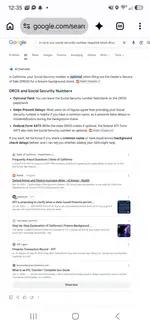
Thank you for proving that AI lies. Take your AI response and tell it that it got it wrong and see what the response is, an example is below:

You are correct, and I apologize for that mistake. There is no Social Security Number field on the California DROS worksheet or the DROS Entry System (DES).
The California DROS system relies heavily on the data swiped directly from your California Driver's License or ID card, which does not transmit or include your SSN.
The confusion often comes from the fact that buyers are required to fill out two separate background check forms at the gun counter simultaneously:
  1. The Federal ATF Form 4473: This federal form does have an optional SSN field (Section 2, Block 8) to help prevent NICS misidentification.
  2. The State CA DROS Form: This state system does not have an SSN field at all. The dealer literally has no way or place to type an SSN into the California Department of Justice database.
Thank you for catching that error and keeping the information accurate.
I tried to add a screenshot of the DROS entry form, but it isn't working correctly and it isn't worth wasting more time with it. I could add, perhaps, the DROS worksheet, but the CA DOJ has failed to properly update it since 2023.
 
Last edited:
Thank you for proving that AI lies. Take your AI response and tell it that it got it wrong and see what the response is, an example is below:


I tried to add a screenshot of the DROS entry form, but it isn't working correctly and it isn't worth wasting more time with it. I could add, perhaps, the DROS worksheet, but the CA DOJ has failed to properly update it since 2023.
It's line 16 on the 4473
 
It's line 16 on the 4473
So do you want to admit that you are wrong yet?

The DROS has NO social security field. The 4473 isn't submitted anywhere, it is stored in case it is needed.

Your AI fed you FALSE information and you didn't bother to check. You didn't do what I suggested which would have proven that you got a typical AI false answer.
 
So do you want to admit that you are wrong yet?

The DROS has NO social security field. The 4473 isn't submitted anywhere, it is stored in case it is needed.

Your AI fed you FALSE information and you didn't bother to check. You didn't do what I suggested which would have proven that you got a typical AI false answer.
I made no differentiation between the two being different since the 4473 is the only one I ever fill out. But sure you're right there is no spot on the Dros only the 4473
 
I made no differentiation between the two being different since the 4473 is the only one I ever fill out. But sure you're right there is no spot on the Dros only the 4473
One is state, the other is federal, two completely different forms. What happens to each is very different as well.

You also actually fill out the DROS, just indirectly, there are questions which you are asked, or are supposed to be asked, and it is submitted electronically, printed and then given to you to sign.
 
I recently sold a firearm to someone and we did a PPT at an agreed upon gun shop. In the course of the transaction I said that the sale was final and there would be no refunds because I intended to spend the money and I did. I just received a message from the buyer stating that their DROS was denied and they would like a refund. I told him to figure it out with the DOJ. He then responded that if it can't be resolved with the DOJ his brother would purchase it. I'm fine with that but it would require me to drive approximately 45min to an hour each way and then spend however long an amount of time in the store. What is the standard etiquette in a situation like this? Update after reaching out on here my gut feeling was confirmed and will not be transferring it to a brother or friend of his. We agreed I will pick it up and put it in my safe while he straightens it out. If it can't be corrected I will place it up for sale again and give him the proceeds when it sells.
you are bending over backwards... guy knew up front he could not own a gun!
 
One is state, the other is federal, two completely different forms. What happens to each is very different as well.

You also actually fill out the DROS, just indirectly, there are questions which you are asked, or are supposed to be asked, and it is submitted electronically, printed and then given to you to sign.

Yeah why was he even denied?
Don't know. He's waiting for the letter from the DOJ to find out
 
you are bending over backwards... guy knew up front he could not own a gun!
Really? How exactly do you know that? People have been denied for owing money to the DMV, would you think that would be the case? It could also be a bogus reason, unless you think that the government always does everything correctly.
 
Back
Top Bottom